












The Best Boots and Trail Shoes for the Camino de Santiago
In brief
Compare Camino boots and trail shoes by terrain and season. Learn how to get the right size, grip, waterproofing and fit for comfortable walking.
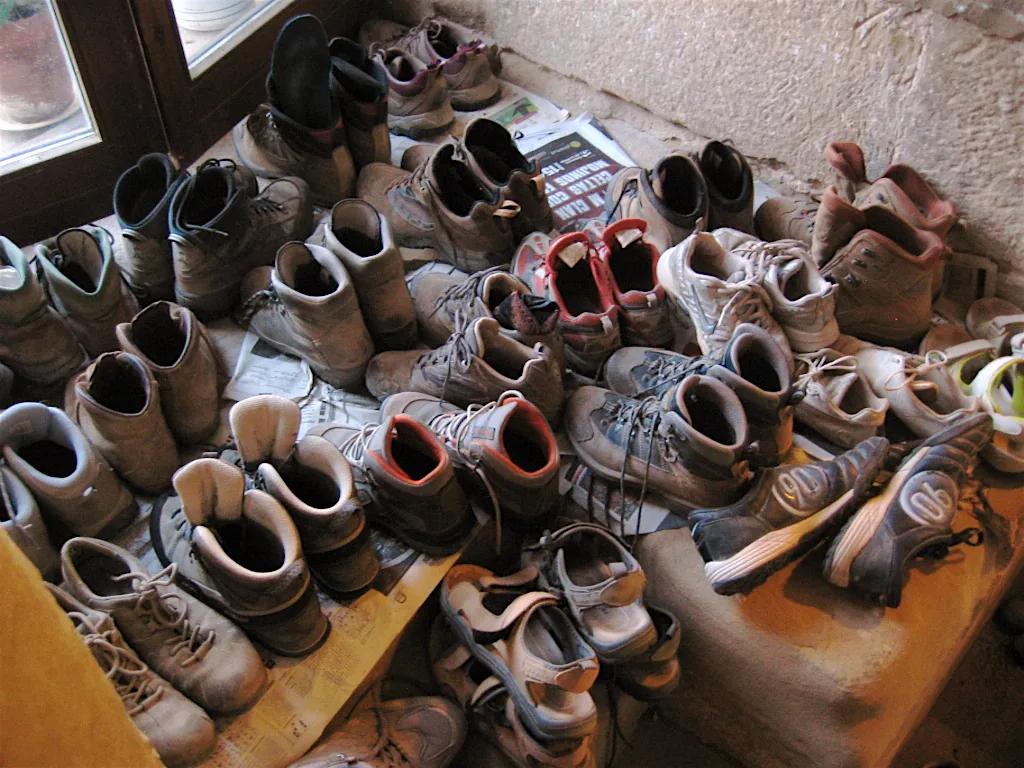
For most pilgrims, the best choice is a pair of comfortable trail shoes with good grip and plenty of toe room. Choose hiking boots if you will be walking a particularly rugged route, expect cold and rain or need more support. The deciding factor is not the brand, but whether the footwear fits your feet and has been thoroughly tested before the Camino.
At a glance
- Trail shoes: lighter, more flexible and quicker to dry.
- Boots: more protection and support in mud, cold weather and rough terrain.
- Try footwear on in the afternoon, wearing the socks you plan to take and leaving room in front of your toes.
- Never wear brand-new footwear on the Camino: test it on several long walks first.
Boots or Trail Shoes for the Camino de Santiago?
There is no single winner. On routes with easy surfaces and in mild weather, trail shoes usually offer the best balance of comfort, grip and weight. On more technical routes or in colder months, lightweight boots may provide the extra protection you need.
Before choosing, consider the terrain, expected weather, backpack weight and stability of your ankles. Experience matters too: if you have walked comfortably in one type of footwear for years, do not switch simply because another option is fashionable.
When to Choose Hiking Boots
Boots are well suited to the Primitive Way and the Northern Way, where you are more likely to encounter steep climbs and descents, mud and rough ground. They are also useful in winter or if you want a stronger barrier against water and cold.
- Advantages: better protection for the ankle and toes, more insulation and greater confidence on rocky or muddy ground.
- Drawbacks: heavier, less breathable, slower to dry and require careful breaking in.
- Typical weight: between 500 and 800 g per boot, depending on construction and size.
A high cuff alone will not prevent a sprain. If you have recurring pain or instability, prioritise a secure heel fit and a stable sole, and seek advice from a healthcare professional before setting off.
When to Choose Trail Shoes
Trail shoes are a very practical option for the French Way and the Portuguese Way, especially in spring or summer. Their lower weight makes a difference over thousands of repeated steps and, if they get wet, they usually drain and dry faster.
- Advantages: lightweight, flexible, breathable and generally comfortable from the first few outings.
- Drawbacks: less ankle protection and may wear out sooner than a sturdy boot.
- Typical weight: between 300 and 450 g per shoe, depending on model and size.
Do not confuse trail shoes with smooth-soled gym trainers. On the Camino, you need a treaded sole, lateral stability and a toe cap that protects your toes on rocky sections and descents.
What Features Should Camino Footwear Have?
The right footwear fades from your awareness as you walk: it holds your foot without squeezing, does not rub and lets your toes move. These qualities matter more than the colour, the model's reputation or a tempting discount.
- Room in the size: feet swell during the day. As a guide, try half a size larger, but judge it by the actual space inside rather than the number on the box.
- Secure heel: it should stay in place on climbs and descents. If it lifts with every step, friction will develop even if the shoe feels soft.
- Wide, reinforced toe box: your toes should not hit the front on a descent. External reinforcement helps protect them from rocks and roots.
- Grippy sole: look for suitable lugs and a reliable rubber compound, such as Vibram or a similar option, especially if you expect wet rock or mud.
- Balanced cushioning: it should feel comfortable without making you unstable. More foam does not always mean a better shoe.
- Removable insole: makes it easier to dry, air the inside or use an orthotic insole that has already been prescribed and tested.
Try both feet, as they are not always the same size. Walk around the shop, find a ramp if there is one and simulate a descent: if your toes hit the front or your heel slips, rule that pair out.
Is Waterproof or Breathable Footwear Better?
A waterproof membrane such as Gore-Tex is recommended for autumn, winter and wet routes. It helps in light rain, puddles and mud, but also traps more heat and, when water gets in through the top, the inside takes longer to dry.
In summer or settled weather, a shoe without a membrane is usually cooler and dries faster. Read about the best time to walk the Camino and decide based on the likely conditions along your route, not on the assumption that waterproof always means better.
No footwear can replace good rain management. Stop your trousers from channelling water inside, take your footwear off at the end of the day and remove the insoles to help everything dry.
Which Boots and Trail Shoes Work Well?
The last varies between brands and generations, so the best model is the one that fits your foot without pressure, rubbing or heel movement.
Check that the specific version still fits you properly. An update can change the last or the feel underfoot even when the product name stays the same.
How Should You Try Footwear Before Buying?
Try it on in the afternoon, when your feet are slightly more swollen, and wear the same socks you will use for walking. Lace it as you would for a stage and check three things: a secure heel, no pressure over the instep and free-moving toes.
- Walk for several minutes and turn to check for sideways movement.
- Walk up and down a ramp; on the descent, your toes should not hit the toe box.
- Try the other foot and allow enough room for the larger one.
- If you notice a hot spot or an irritating seam in the shop, do not assume it will disappear later.
If you use orthotic insoles, try them inside the footwear before deciding. Make sure there is enough volume too: adding an insole can raise the heel or compress the instep.
How Much Should You Break In Footwear Before the Camino?
Never start the route in brand-new footwear. Wear it first on short walks, then gradually increase the duration, including at least one hilly outing with a loaded backpack. This will show you how it fits when your feet swell and reveal any rubbing while there is still time to change models or adjust the lacing.
Boots generally need a more gradual breaking-in period than trail shoes. The aim is not merely to soften the materials: you also need to confirm that your socks, insoles, lacing and footwear work together for several hours.
Build these test walks into your eight-week Camino training plan. If a hot spot develops, stop and deal with it before it turns into a blister; our guide to blister prevention and treatment will help you prepare your daily foot-care routine.
What Mistakes Should You Avoid When Choosing Footwear?
- Buying online without knowing the last: two models in the same size can fit very differently.
- Choosing a fit that is too tight: feet swell as you walk and need room at the front on descents.
- Prioritising waterproofing in hot weather: a membrane can increase moisture inside.
- Wearing smooth or badly worn soles: they lose grip precisely when the ground is wet or loose.
- Changing insoles at the last minute: every new combination needs testing beforehand.
- Ignoring minor discomfort: an early hot spot can end up affecting the entire day.
Pack a pair of lightweight sandals for the albergue and to let your feet rest at the end of the day. They are not intended to replace your main footwear during a stage, except for a short-term need on a safe section.
Test the whole setup on consecutive days
A long walk tells you a lot, but not how your feet feel when you put the shoes on again the next morning. Before travelling, try two consecutive walking days with a load similar to the one you will carry. There is no required distance: notice recurring pressure, heel movement or a need to loosen the laces later in the day. Identify the specific problem before buying another pair.
Change one thing at a time: socks, lacing or fit. That lets you see what helps. Do not introduce new insoles or an untested lacing method on departure day. Seek professional advice for persistent pain, loss of sensation or discomfort that changes your walking pattern; this guide cannot prescribe footwear or treatment for your feet.
After a wet day, remove removable insoles, loosen the laces and leave the footwear somewhere ventilated. Follow the manufacturer's instructions and avoid direct heat. Check inside before setting off: a raised seam, a stone or a damp sock may explain discomfort that seemed to be a sizing issue.
Do not let your footwear become a reason to push your pace. Short stages give you room to reorganise a day and check the fit. For a brief trip, compare Sarria and Tui by terrain and logistics; a route's name does not dictate boots or shoes. For the route from Tui or Valença, test on hard surfaces as well as trails.
Check your feet in good light on arrival. For daily care, follow the foot-care guide. Tested footwear, an adjustable day and attention to discomfort matter more than wearing somebody else's favourite model.
Frequently Asked Questions
Can I Walk the Camino in Road Running Shoes?
They are only a reasonable choice if they provide stability and the route is very easy and dry. In general, trail shoes offer better grip and protection without sacrificing lightness.
Should I Buy Half a Size Larger?
It is a useful guideline because feet swell, but not an automatic rule. Make sure your heel stays secure and your toes have room without your foot sliding around inside.
Do Waterproof Boots Keep Your Feet Dry?
They help in light rain, damp conditions and mud, but water can enter through the cuff. Once wet inside, they also usually take longer to dry than breathable trail shoes.
Do I Need Boots If I Have Weak Ankles?
Boots can feel supportive, but they are no substitute for strength, technique or a professional assessment if you frequently sprain your ankles. Test the full setup on uneven ground before your trip.
When Should I Replace My Footwear?
Replace it if the sole has lost its tread, the midsole feels compressed, the lining causes rubbing or the structure no longer holds your foot securely. Do not try to squeeze a multi-day trek out of a worn-out pair.
What Should I Do After Choosing My Footwear?
Choose the footwear that best suits your feet, route and time of year, then use it on training walks with the socks and backpack you will take. Next, check what to pack for the Camino de Santiago to complete your kit without carrying unnecessary weight.
Cover photo: neil cummings · CC BY-SA 2.0 · WebP.