











Camino de Santiago with short stages: 10–15 km plans
In brief
Two practical plans with real stops and a method for arranging 10–15-kilometre days without confusing shorter distances with accessibility.
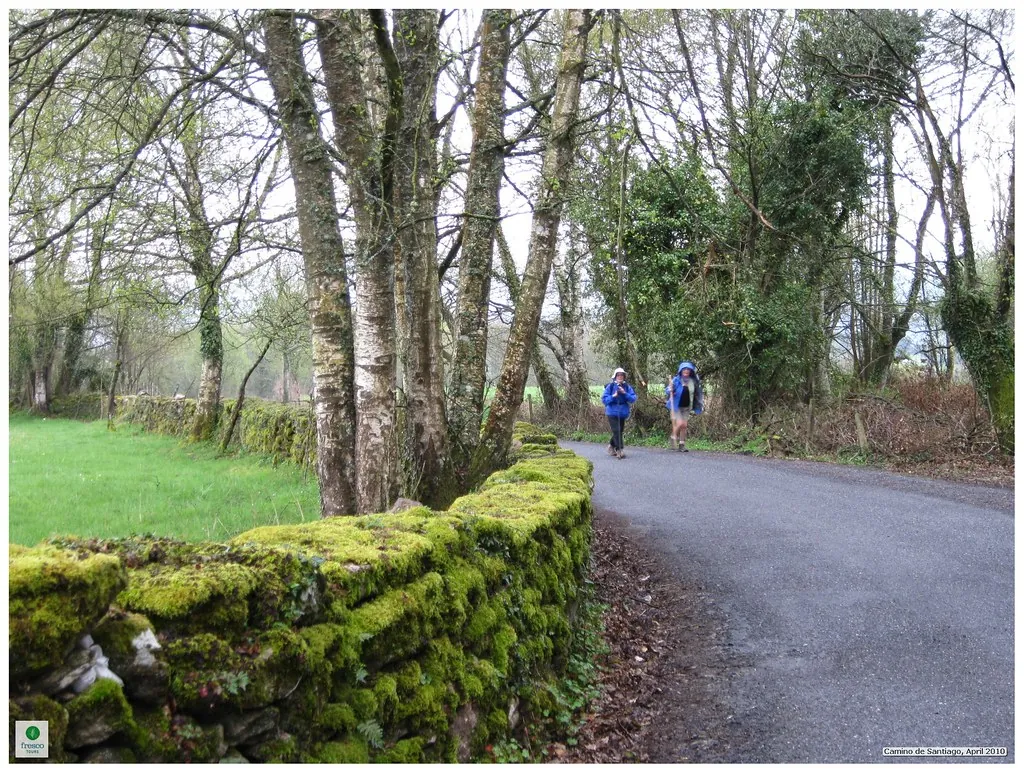
Walking stages of 10 to 15 kilometres is a valid way to experience the Camino, provided your plan fits the accommodation and services along the route. Dividing the total distance by your daily limit is not enough: you need to know where to sleep, eat and start again. Here are two practical two-day plans with real stopping places, plus a method for extending your journey. A short stage means fewer kilometres, but does not guarantee easy terrain or accessibility.
First, decide what short means for you
A distance limit might reflect the rest you want, recovery, family responsibilities or simply the time you wish to spend in each place. There is no need to assign that pace to an age, gender or assumed fitness level. Describe your needs precisely: maximum distance, walking time, suitable surfaces and room type. That information helps create a plan you can actually use.
The 10–15-kilometre range is a planning target, not a threshold you must reach even when tired. A bed at nine kilometres may be a better choice than continuing to fifteen without confirmed accommodation. You can also choose a two- or three-day trip that does not reach Santiago. Walking part of the French Way is still a complete trip when that was your intention.
Check where distances are measured. A published stage distance usually follows the route between settlements; your accommodation may be before, beyond or away from it. If fifteen kilometres is a firm limit, calculate from the departure door to the arrival door. Add any detour needed for food. The map helps locate beds, but does not replace checking access directly with the property.
A two-day plan: Sarria–Morgade–Portomarín
This plan divides the usual first stage from Sarria. Casa Morgade, the accommodation itself, places its stop approximately 11 kilometres from Sarria and 12 from Portomarín. These are approximate references: published measurements do not always agree, and your exact starting point changes the result. Use the address of your bed in Sarria to check the first day before booking.
- Day 1: Sarria–Morgade, about 11–12 kilometres. Confirm your night at Casa Morgade and whether you can eat there.
- Day 2: Morgade–Portomarín, about 11–12 kilometres depending on the points used. Book a bed in Portomarín and check the approach.
Day one: a rural overnight stop
Leaving Sarria involves more than following a flat line. There are gradients and dirt paths; rain can change how much effort they take. Carry simple food from the start and check where you will take your first break. The Sarria–Portomarín stage guide describes the route you are now dividing into two days, without requiring you to use its conventional finish.
Morgade is a rural stop with accommodation and meal services advertised by the property. Do not treat it as a town with all of Sarria's alternatives. Ask whether it opens on your dates, what food is available and what happens if you cancel. Without a confirmed bed, this arrangement remains an idea rather than a settled itinerary.
Day two: entering Portomarín
Continue from the place where you finished the previous day. Approaching Portomarín involves a descent towards the Miño followed by the entrance to the town. The well-known stairway may matter for your needs; ask for directions to the specific accommodation you have chosen. Do not assume that a road alternative is safe or suitable simply because it avoids steps.
Portomarín offers places to look for food and different accommodation at the end of the day. Check opening dates, especially outside the main season, and book if a particular bed is essential to your plan. You can finish here, return home or continue on other days. This two-stage trip alone does not complete the distance needed for the Compostela.
A two-day arrival plan: O Pedrouzo–Lavacolla–Santiago
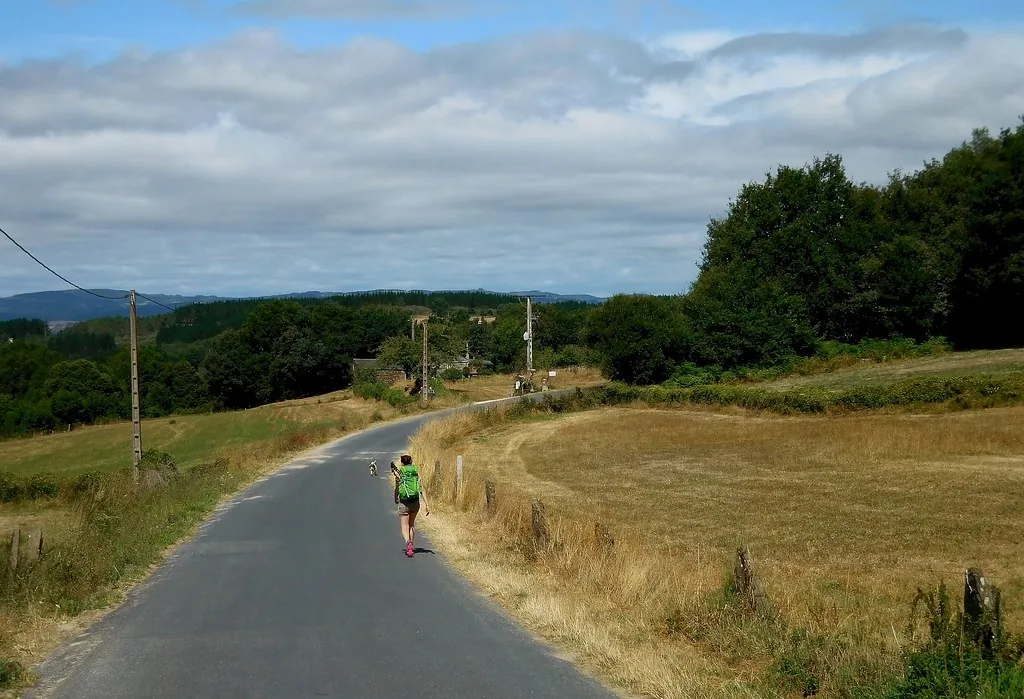
The Xunta's official route page divides Arca, whose main settlement is O Pedrouzo, and Santiago into smaller sections. It gives 10 kilometres between Arca and A Lavacolla and 20.2 kilometres for the entire stage. The difference leaves approximately 10.2 kilometres from A Lavacolla along that route. This provides a clear basis for splitting the arrival; add access to your accommodation and any detours.
- Day 1: O Pedrouzo–A Lavacolla, about 10 kilometres. Confirm accommodation in A Lavacolla.
- Day 2: A Lavacolla–Santiago, about 10 kilometres. Count the distance to your accommodation as well as reaching the centre.
A confirmed night in A Lavacolla
Albergue Lavacolla has its own website, direct contact details and advertised kitchen and laundry facilities. Its existence makes this a real stopping option, but does not guarantee a bed on your date or facilities suitable for a particular need. Ask about opening, meals and check-in conditions. If you need a private bathroom or a room without stairs, explain that when booking; do not assume it from the property's name.
The stretch from O Pedrouzo includes climbs and passes through different settlements near the airport. Measuring about ten kilometres does not make it effortless. Save energy for the second day and do not extend the first simply because you arrive early. Use the accommodation directory to assess alternatives, always checking their position relative to the route.
The final morning still has hills
From A Lavacolla, continue towards Monte do Gozo and the urban approach to Santiago. There are climbs, descents and surfaces that may be wet. After reaching the centre, you still need to find your bed and organise your rest. If you want to enter the cathedral or complete paperwork, leave flexibility instead of making it a compulsory arrival time.
This plan suits a short arrival walk or splitting the end of a longer Camino. Starting in O Pedrouzo and walking only these two days does not fulfil the minimum distance for the Compostela. If the document is part of your goal, read the requirements guide and first design a sufficiently long continuous route. The value of walking does not depend on requesting that document.
How to extend the plan without inventing overnight stops
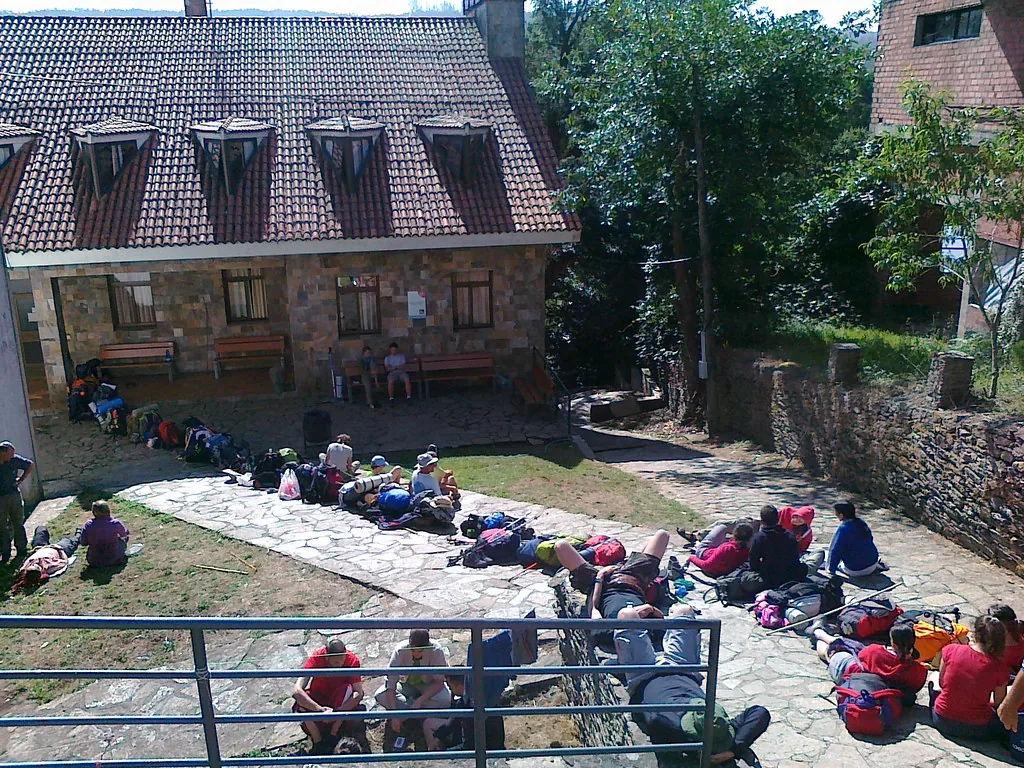
To complete a longer trip with short stages, work from beds towards kilometres. Start by locating open accommodation near your preferred walking range. Then check distance, access, food and availability for each stop. If services are missing halfway through an official stage, accept a shorter day or allow more time: do not plan to sleep somewhere merely because a name appears on the map.
- Write down the exact starting and finishing point for each day.
- Record where you can obtain food and safe drinking water without depending on one open café.
- Confirm the bed and the amendment conditions you need.
- Prepare a real alternative if the accommodation closes or fills up.
- Separate walking days from arrival, return travel and rest days.
Some stretches offer fewer rooms and a larger difference between the published distance and the walk to the door. Flexibility means changing the plan early, rather than continuing to the next village after you have reached your limit. Use the planner for support and keep a simple record of bookings. Avoid booking the entire journey before checking its most sensitive day.
From Tui, the usual seven-day arrangement still includes days exceeding fifteen kilometres. The Portuguese Way guide from Tui and Valença shows exactly where. Calling a plan “relaxed” is not enough. If you need to keep your maximum every day, review the intermediate nights and allow more days.
Services and accessibility are different questions
A village with a hostel does not guarantee a pharmacy, shop or dinner. Ask about what you will actually use and how far away it is. A kitchen can exist without utensils; a café can be closed on your arrival day. Carry a small reserve of food and water suited to the next stretch, without packing for the entire trip out of fear. The food guide helps keep your stops simple.
A short stage does not guarantee accessibility either. Before travelling, ask for specific information about steps, slopes, entrance widths, bathrooms and surfaces. Assess the entire journey, rather than just a room advertised as adapted. If you need assistance or have a medical limitation, discuss effort with the professional who knows your situation. This guide does not assess wheelchair routes or certify access.
Luggage transport can reduce the load, but does not remove gradients or fatigue. Check collection and delivery at every intermediate stop and what you will carry during the day. The backpack transport guide explains useful questions. If you take a personal transfer, distinguish it from walking and return to the correct point if you want to preserve continuity.
Pace, company and decisions along the way
Try two consecutive walks near home with your intended footwear and load. Notice how you feel the next morning; one comfortable day does not reproduce several days of travel. Review Camino training and adjust your plan before paying for bookings that are difficult to change. Needing rest is not a defeat and requires no comparison with other people.
If you are looking for Camino companions, describe your daily maximum and overnight stops from your first conversation. Saying “a slow pace” is insufficient: someone can walk slowly and still want to cover thirty kilometres. Agree what to do if one person needs to stop earlier. A clear conversation protects the trip while leaving space to share only part of a day.
Frequently asked questions
Can I walk the Camino in 10–15-kilometre stages?
Yes, if you adjust the number of days and confirm intermediate nights. The two plans here give practical arrangements; they do not promise that every stretch supports the same range.
Do I have to reach Santiago on this trip?
No. You can finish in Portomarín or another planned stopping place. If you want the Compostela, arrange the required continuity and distance separately.
Is a short stage accessible?
Not necessarily. Slopes, steps, mud and accommodation access matter as much as kilometres. Your needs require specific checks.
What if there is no bed halfway through a stage?
Change the arrangement before leaving, add a day or find another confirmed stop. Do not base the trip on a bed nobody has confirmed.
Can I continue if I feel well?
You can revise your plan, but first confirm the new bed and the effect on the following day. Arriving early can also be an opportunity to rest.
Cover photo: Fresco Tours · CC BY 2.0 · WebP.
Sources consulted
Featured places on this route
Albergue de Peregrinos do Cebreiro
Municipal hostel · O Cebreiro, Pedrafita do Cebreiro
San Nicolás de Flüe Hostel
Donation-based hostel · Hospital de Órbigo
Albergue de Peregrinos de San Lázaro
Municipal hostel · Santiago de Compostela
Albergue de Peregrinos de Triacastela
Municipal hostel · Triacastela
Albergue de Peregrinos Dos Chacotes
Municipal hostel · Os Chacotes, Palas de Rei
Albergue de Peregrinos de Palas de Rei
Municipal hostel · Palas de Rei