




The Compostela: What It Is and How to Get It
In brief
The Compostela certifies a pilgrimage to Santiago with a religious or spiritual purpose.
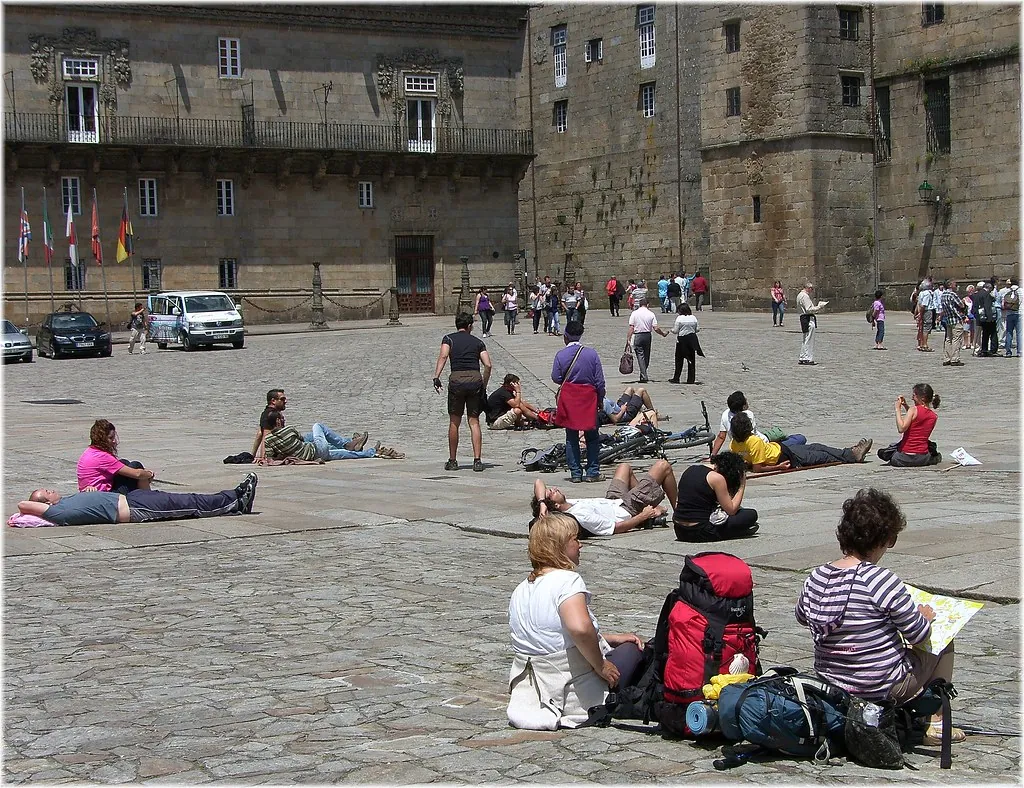
The Compostela certifies a pilgrimage to Santiago with a religious or spiritual purpose. It is free and requested in person with your stamped credential. Current requirements go beyond the phrase “the last 100 km”: continuity, the same route and the arrival stage matter. Allow time for the process, because same-day collection is not guaranteed.
What is the Compostela and what does it certify?
The Compostela is a document issued by the Pilgrim's Office at Santiago de Compostela Cathedral. Written in Latin, it certifies that you have completed the pilgrimage, meeting both the minimum-distance and motivation requirements.
The Office traces the document to letters of proof issued from the 13th century. Earlier badges such as the scallop shell were easier to counterfeit. Today the Compostela still certifies a religious or spiritual pilgrimage; it is not a prize for walking more kilometres.
It is not a reward for completing an entire route, nor does it depend on the total number of stages you walk. What matters is covering the minimum distance to Santiago, providing proof with your pilgrim credential and declaring an accepted motivation.
What are the requirements for receiving the Compostela?
On foot or horseback, complete 100 continuous km towards Santiago on one recognised route; the last stage must be at least the one immediately before the Cathedral. If you start outside Spain on a recognised route, complete at least 70 continuous km in Spain. Cycling requires 200 km under the same conditions. Sailing requires 100 nautical miles, then walking the rest from the landing port with the corresponding stamps.
A religious or spiritual purpose is also required. Do not mix routes to add up kilometres. Consult the Office before setting off about special circumstances.
Where can you start to meet the minimum-distance requirement?
You do not have to complete all 772 km and 33 stages of the French Way to receive the Compostela. A popular option is to walk the final 115 km from Sarria; the first day follows the 22.20 km stage from Sarria to Portomarín.
The starting point can vary, but do not add isolated walks to reach the minimum. Check the recognised itinerary on the Camino map and, if starting outside Spain or unsure about A Coruña, ask about your circumstances before buying travel tickets.
How should you stamp your pilgrim credential?
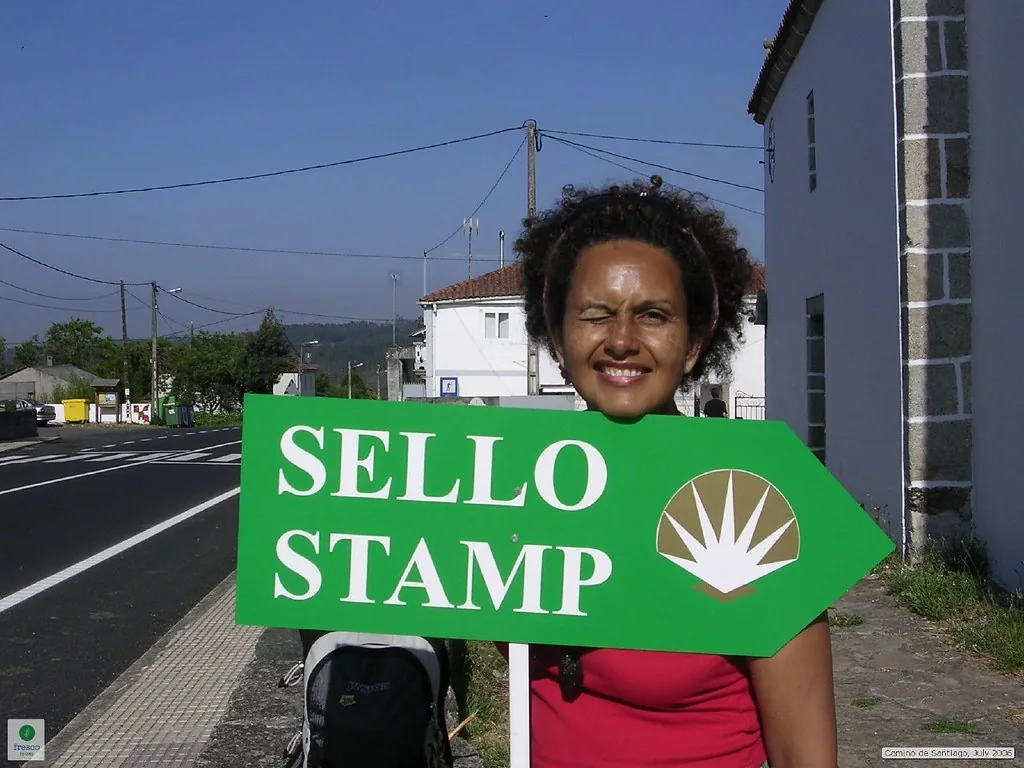
If you complete only the minimum distance, get a dated stamp at the start and end of each stage. Stamp again when setting off even if you stamped there at the end of the previous stage. The aim is to document departure and arrival, not to collect any two stamps in one place.
Collect your stamps at different points throughout each day so they provide a record of your route. Before leaving each place, make sure the date and stamp are both clear. This simple habit helps prevent any doubts at the Pilgrim's Office.
If you do not have one yet or are unsure how it works, read how to get and use a pilgrim credential before setting off.
Where and when can you collect the Compostela?
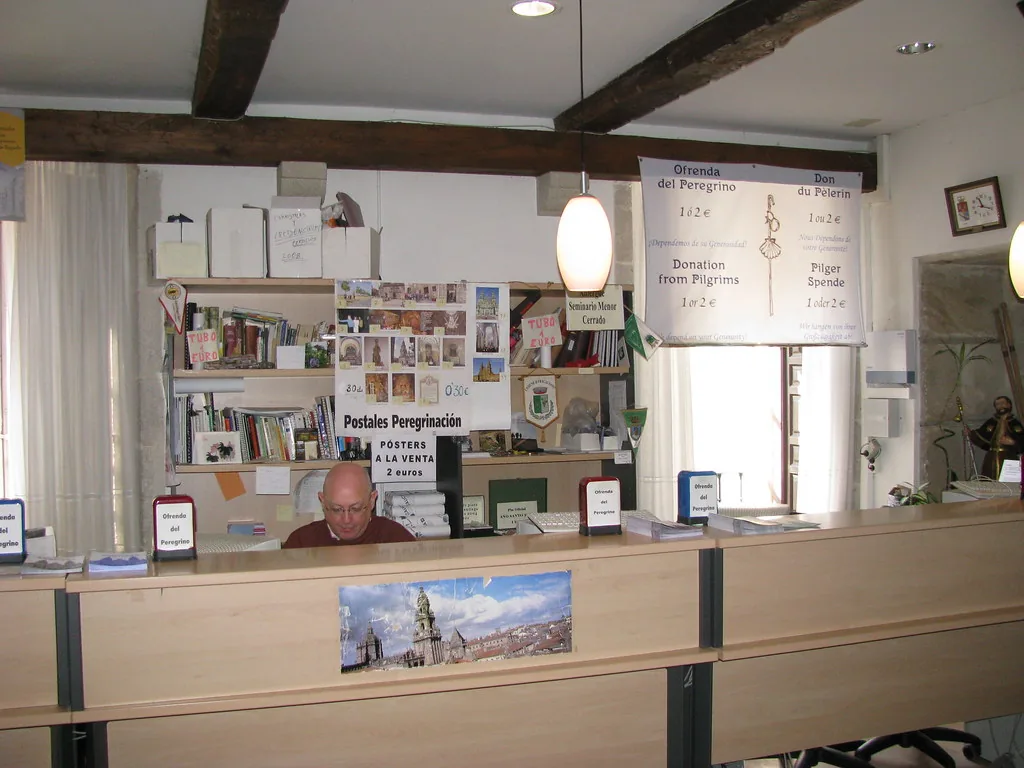
The Office is at Rúa Carretas 33, Santiago. Published hours are 9:00–19:00 daily, closed on 25 December and 1 January. Check before arriving. The Compostela is free and issued individually in person; you cannot collect it for someone else.
Complete pilgrim registration, keep the code you receive and the date, then follow instructions to obtain a queue ticket. Its QR lets you check the wait. At busy times same-day collection cannot be guaranteed: leave a buffer before a train or flight.
What if you walk the Camino for sport or tourism?
Explain your purpose honestly: the Compostela has religious or spiritual significance. Ask the Office which document applies if your trip is solely for sport or tourism. Do not assume the distance certificate is an automatic alternative: its official page requires the same conditions as the Compostela.
The distance certificate records details such as your start, kilometres, route and arrival. Check current application terms; it is different from the credential you carry during the walk.
Prepare your arrival without making it a race
Before leaving, decide whether you want a Compostela and check the distance from your starting point. Do not leave this until the last day: walking further on another route or adding an excursion does not necessarily fix an itinerary that fails the conditions. If splitting your pilgrimage across several trips, keep the credential and resume stages in chronological and geographical order.
When planning each day, identify places to stamp at departure and arrival. Check dates before putting the document away and protect it from rain. If a stamp is missing or blurred, or you had to interrupt a stage, explain what happened to the Office; do not fill in or invent marks to make the story look complete. Keep itinerary information too, so you can clarify any questions.
Registration is not the issuing of the Compostela or a booked collection time. Keep the code accessible even if your connection fails or your battery runs out. Ask staff for help if the form causes problems. Have your original credential and identity document handy, without handing your luggage to strangers while waiting.
Allow a night and enough time in Santiago if your return journey permits. Waiting times change and arrival deserves more than a queue. Eat, drink and rest before visits or onward travel; the Santiago guide helps organise those hours. If travelling home through Portugal, check the journey from Santiago to Porto without relying on same-day collection to catch a tight departure.
Who is setting off on your dates
To Santiago
Written in SpanishPrimera vez lo hago solo,si alguien se apunta...llevo mucho tiempo queriendo hacerlo...
- Distance
- 771 km
- Stages
- 33
- Languages
-
From Porto to Santiago
Written in PortugueseOlá! 😊 Eu sou a Gabriele, tenho 25 anos, sou brasileira e moro no Porto há 6 anos. Sempre tive muita vontade de fazer o Caminho de Santiago, mas acabava adiando por nunca ter companhia. Desta vez decidi que não quero mais esperar e estou à procura de alguém para dividir comigo essa aventura! Adoro viajar, conhecer lugares novos, tirar muitas fotos, conversar sobre tudo e conhecer pessoas diferentes. Acho que uma das partes mais bonitas do Caminho é justamente poder compartilhar histórias, momentos e experiências com alguém pelo caminho. Não estou à procura de alguém que tenha necessariamente o mesmo ritmo ou experiência, seria a minha primeira vez também! Quero apenas encontrar uma pessoa tranquila, divertida e aberta a viver essa experiência juntas, com direito a boas conversas, risadas, paisagens lindas e, claro, muitas fotos e vídeos para guardar de recordação. Se também estás a pensar fazer o Caminho e procuras companhia, manda-me uma mensagem! 💚 Buen Camino!
- Distance
- 241 km
- Stages
- 10
- Languages
-

 Organised by
Alina L.
From Luarca to Santiago
I am doing this for the 4th time Looking for likeminded people to share the experience
5 places left
- Distance
- 245 km
- Stages
- 11
- Languages
-
Frequently asked questions
Does it cost anything?
The Compostela is free. Other documents or services have their own conditions.
Are 100 km enough?
On foot or horseback, if continuous on the same route and meeting arrival conditions and other requirements. Cycling requires 200 km.
Can I walk in separate trips?
Yes, with stages in chronological and geographical order and a credential documenting the journey.
How many stamps do I need?
If doing only the minimum, stamp at the start and end of each stage with the date, including each new departure.
Will I definitely collect it on arrival?
No. Busy periods can prevent same-day collection; allow time before travelling home.
Cover photo: jl.cernadas · CC BY 2.0 · WebP.