









The Final 100 km of the Camino de Santiago from Sarria: Complete Guide
In brief
Plan the 114.2 km from Sarria to Santiago: five stages, accurate distances, albergues, booking tips and two daily stamps for the Compostela.
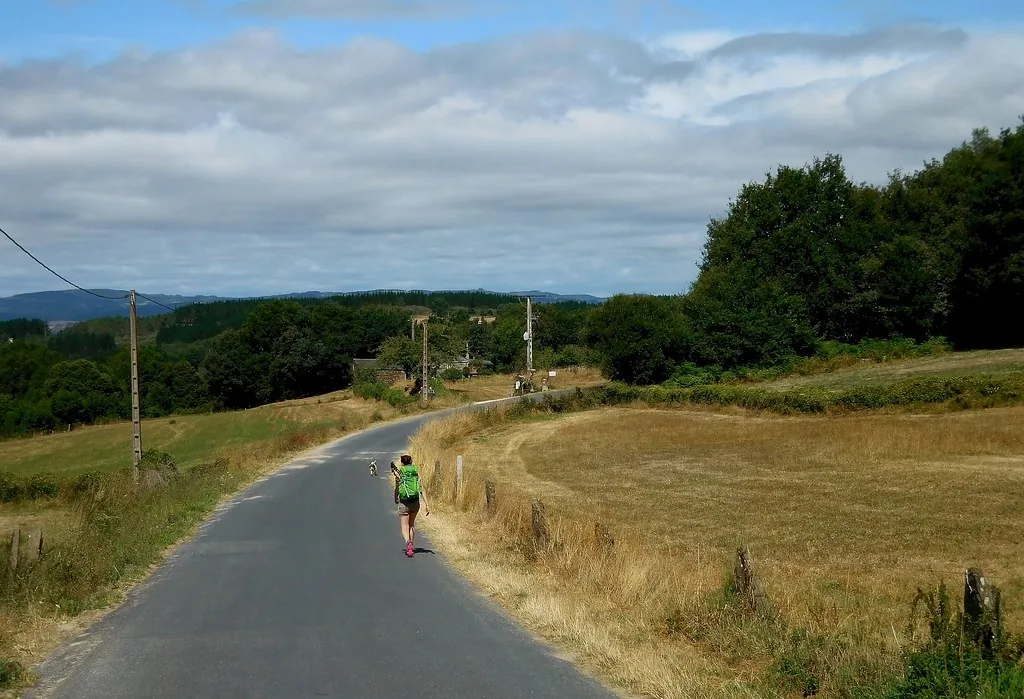
The final 100 km of the Camino de Santiago from Sarria actually cover 114.2 km over five stages to Santiago. This section of the French Way exceeds the 100 km minimum required to apply for the Compostela and offers plenty of albergues, well-established waymarking and services along the route.
At a glance
- You need five days to follow the usual stage plan between Sarria and Santiago.
- The longest stage is Palas de Rei–Arzúa, at 28.5 km.
- You must carry your pilgrim credential and collect two stamps per day from Sarria.
- Between May and September, it is wise to book ahead, especially in Arzúa and O Pedrouzo.
Why start the Camino de Santiago in Sarria?
Sarria is around 115 km from Santiago, giving you some leeway over the minimum distance required to receive the Compostela on foot or horseback. It is also a town with rail and bus connections, a clear advantage if you only have a week off.
The other reason is practical: from here, you walk the final section of the French Way, a route with a well-established network of albergues. You will find places to sleep, eat and stamp your credential both at the usual stage stops and in many of the smaller settlements between them.
You should also expect a lively atmosphere. This stretch is popular with pilgrims who only have a few days, organised groups and walkers who began earlier on the Camino, so it gets busier during the most popular periods.
How many kilometres is it from Sarria to Santiago?
The five stages add up to 114.2 km. Although it is commonly called the final 100 km, that figure refers to the minimum distance associated with the Compostela, not the exact distance from Sarria.
- Stage 1, Sarria–Portomarín: 22.2 km.
- Stage 2, Portomarín–Palas de Rei: 24.8 km.
- Stage 3, Palas de Rei–Arzúa: 28.5 km.
- Stage 4, Arzúa–O Pedrouzo: 19.3 km.
- Stage 5, O Pedrouzo–Santiago de Compostela: 19.4 km.
The distances are not evenly spread. The third day is the most demanding, while the next two are shorter. Before setting off, you can check the route, elevation and accommodation on the map of routes, stages and albergues.
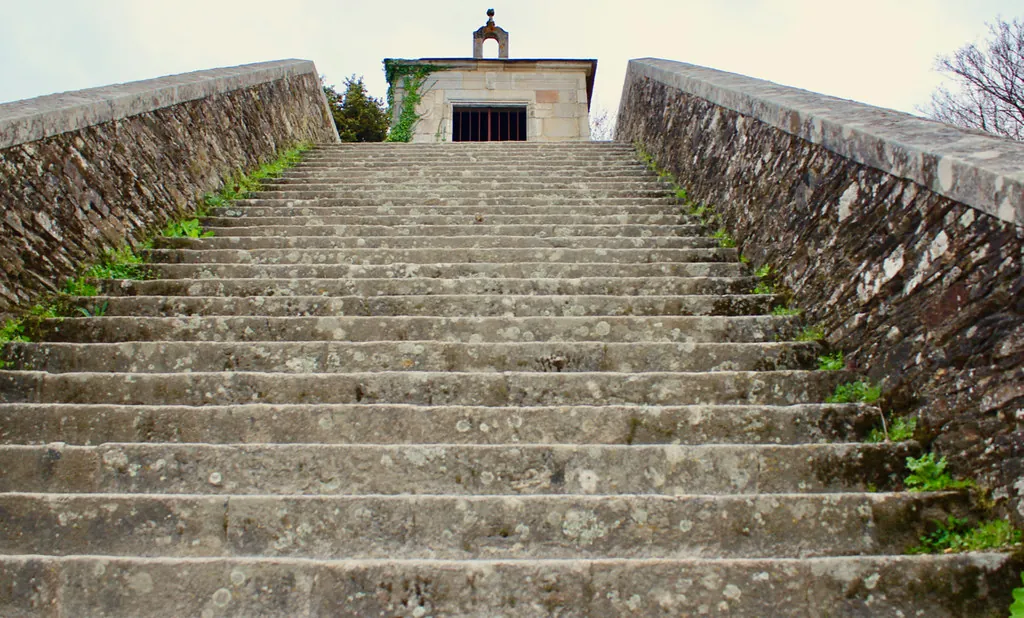
What are the five stages from Sarria like?
Stage 1: Sarria to Portomarín, 22.2 km
The stage from Sarria to Portomarín eases you into the rhythm of the Camino. It leads through oak woods and small Galician villages before ending across the River Miño.
Portomarín was rebuilt on higher ground after the Belesar reservoir. Arrive with tested shoes: this day lets you adjust your pack and observe your response to consecutive walking days, without trying new gear on the route.
Stage 2: Portomarín to Palas de Rei, 24.8 km
The stage from Portomarín to Palas de Rei has an undulating profile, with gentle but steady climbs. The route passes through Gonzar, Ligonde and Eirexe before reaching the day's destination.
Its 24.8 km call for a measured pace from the outset. It is not the longest stage, but it comes immediately before Palas de Rei–Arzúa, so avoid pushing too hard and use the afternoon to rest.
Stage 3: Palas de Rei to Arzúa, 28.5 km
The stage from Palas de Rei to Arzúa is the longest of this section. It passes through Melide, known for its octopus, then follows the course of the River Iso to Arzúa, a town closely tied to the area's cheesemaking tradition.
At 28.5 km, an early start gives you time to walk without rushing and arrive with daylight to spare. If that distance does not suit your fitness level, you can split the stage over two days and add an extra day to your itinerary.
Stage 4: Arzúa to O Pedrouzo, 19.3 km
The stage from Arzúa to O Pedrouzo runs through eucalyptus woodland and brings the distance down to 19.3 km. It is a good day to let your legs recover after the previous stage.
O Pedrouzo is the usual final stop before Santiago and accommodation is in high demand. Booking somewhere to stay in advance means you will not have to find a bed at the end of the day, with only one stage left to the finish.
Stage 5: O Pedrouzo to Santiago, 19.4 km
The stage from O Pedrouzo to Santiago completes the route in 19.4 km. It passes Monte do Gozo, where you catch your first glimpse of the cathedral towers, before entering the historic centre and reaching Praza do Obradoiro.
Although this stage is shorter than the first three, do not treat it as a mere formality. Set off in good time, keep a comfortable pace and look after your credential: you will need it on arrival if you intend to apply for the Compostela.
What do you need to receive the Compostela from Sarria?
You must provide proof of your journey with a pilgrim credential. From Sarria, you need at least two stamps per day, usually one in the morning and another in the afternoon, collected at different places along the route such as albergues, bars or churches.
Do not leave all your stamps until the end of the day. Making them part of your stops helps prevent you from forgetting and ensures your credential shows your progress on each stage. Protect it from damp and check every evening that the day's stamps are legible.
When you reach Santiago, the Pilgrim's Office will check your credential before issuing the Compostela. Walking the distance is not enough if you cannot prove it, so keep this document with you at all times.
Where can you stay between Sarria and Santiago?
This stretch has a wide range of public, private and parish albergues. Beds are available in the main towns and in many smaller settlements along the way, making it easier either to keep to the usual five-stage itinerary or adjust a day's walk.
- Sarria: has plenty of public and private accommodation and is a good place to buy anything you still need before setting off.
- Portomarín: offers several options around the new town after you cross the Miño.
- Palas de Rei: is a popular stage stop, with a municipal albergue and private alternatives.
- Arzúa: has a large number of beds at the end of the longest day.
- O Pedrouzo: is the logical final stop and often fills up early in high season.
Choosing accommodation is about more than finding a bed. Make sure its location fits the distance you want to walk and avoid adding unnecessary travel at the end of the day. If you split Palas de Rei–Arzúa, choose your intermediate stop before booking the remaining nights.
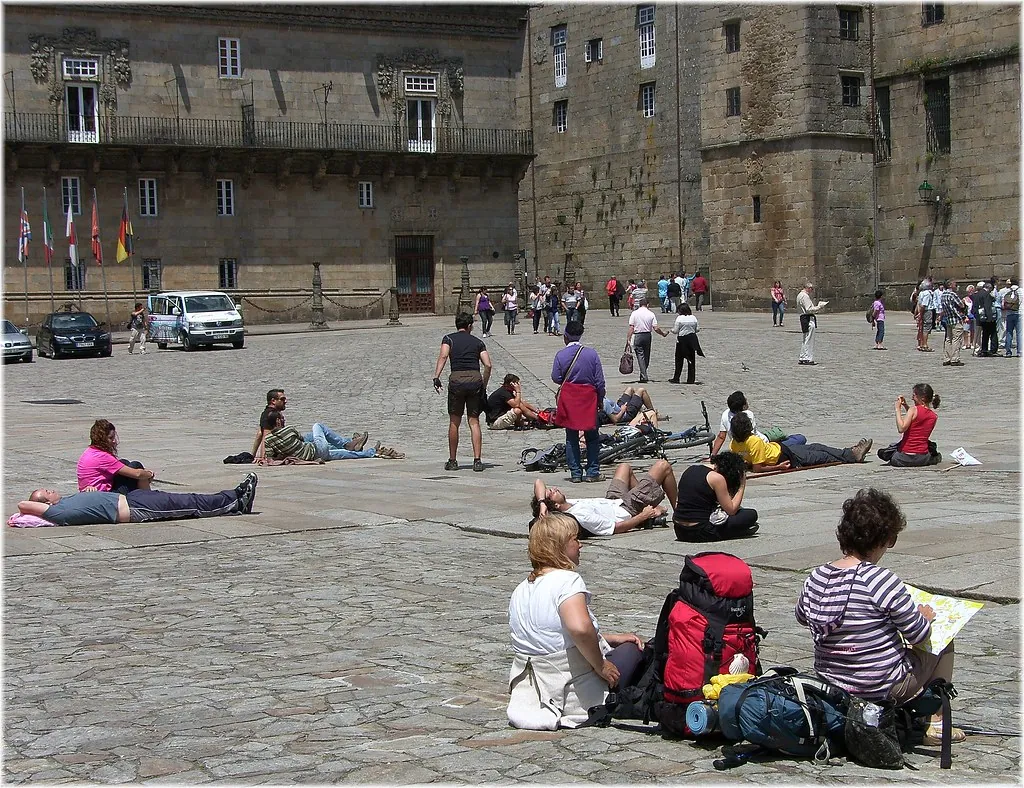
Do you need to book albergues in advance?
Between May and September, it is wise to book accommodation wherever reservations are accepted, especially in Arzúa and O Pedrouzo. Demand also rises at Easter and around July 25, the feast day of St James.
For albergues that do not take bookings, check opening times and admission conditions. An early start does not guarantee a bed. Keep an alternative and choose enough daylight without turning the stage into a race.
One important decision is how to tackle the third stage. Keeping it at 28.5 km concentrates the effort into a single day; splitting it reduces your daily distance but requires an extra night and changes your later bookings.
How should you prepare for the final 100 km from Sarria?
Start by deciding whether you will complete the route in five days or split the longest stage. This choice determines how many nights you need to book and prevents last-minute decisions once you are already walking.
Your footwear should be thoroughly broken in before you reach Sarria. During the walk, check your feet at the end of each stage and adjust your backpack if you notice any discomfort. Consistency matters more than speeding up over the first few kilometres.
Keep your credential within easy reach so you can stamp it without emptying your backpack at every stop. At the end of the day, check both stamps, prepare what you need for the morning and review the next stage, especially before Palas de Rei–Arzúa.
If you are travelling at the busiest times, book at least the most sought-after overnight stops. The breathing room that comes with a simple plan is especially welcome when you reach Arzúa or O Pedrouzo tired.
Five, six or seven days: choose before booking
Five days is a common arrangement, not a Camino requirement. For six, keep Portomarín and Palas de Rei, add a night in Melide before Arzúa, then continue through O Pedrouzo to Santiago. This splits the long day without changing every stop. Confirm a bed in Melide first and check distances from your actual accommodation: reaching and leaving a town takes time too.
With seven days, you can also split the first stage and consider a night around Ferreiros, provided an open accommodation fits the route. This is a plan to check, not a package with guaranteed beds. Use the route map and short-stage guide to review stops. Do not keep a booking that forces more walking than you can repeat the next day.
Add arrival, return travel and time in Santiago to the walking days. Check getting to Sarria before fixing your first departure. For another week-long option, compare Sarria with Tui: a different start may suit connections better than compressed stages. Bring tested footwear; Portomarín should not be your first trial of new shoes.
Starting in Sarria does not automatically earn a Compostela. The official rule requires 100 continuous kilometres towards Santiago on the same recognised route on foot or horseback, with the last stage at least the one immediately before the Cathedral; cycling requires 200 kilometres. Walking from Sarria, collect two dated stamps daily and preserve route continuity. If an incident requires transport, explain it to the Pilgrim Office instead of counting kilometres you did not walk. Your wellbeing comes first.
Frequently asked questions
How many days does it take to walk from Sarria to Santiago?
Five days follow the usual division. Six allow a night in Melide to split Palas de Rei–Arzúa; seven allow another shorter day if suitable accommodation is available. Add arrival and return travel too.
Is it exactly 100 km from Sarria to Santiago?
No. The route described here covers 114.2 km and is often rounded to about 115 km. The phrase final 100 km refers to the minimum distance required to apply for the Compostela on foot or horseback.
What is the hardest stage from Sarria?
Palas de Rei–Arzúa is the most demanding in terms of distance, at 28.5 km. Setting off early and avoiding overexertion on the first two days will leave you in better shape to tackle it.
How many stamps do you need each day?
From Sarria, you must collect two stamps per day in your credential, each from a different point along the route. Check them every evening so you can spot any omissions before moving on.
Where should you book first?
Prioritise Arzúa and O Pedrouzo, especially between May and September, at Easter and around July 25. Both are popular stage stops, and O Pedrouzo is the usual final stop before Santiago.
Once you have settled on your stages and overnight stops, read how to receive the Compostela so you arrive in Sarria with your credential and a clear understanding of the stamp requirements from day one.
Cover photo: Irene Grassi (sun sand & sea) · CC BY-SA 2.0 · WebP.