












Public Albergues vs Private Accommodation on the Camino: Pros and Cons
In brief
You can combine public albergues and private accommodation according to your budget, sleep and need to book. There is no ideal split of nights for everyone: a shared bunk and a room of your own can fit the same trip.
You can combine public albergues and private accommodation according to your budget, sleep and need to book. There is no ideal split of nights for everyone: a shared bunk and a room of your own can fit the same trip.
At a glance
- Prices vary between networks, towns and properties; donation-based accommodation also calls for a contribution. Check the current rate at your stop before budgeting and allow for an alternative.
- For private accommodation, compare the final price per person or room and what it includes: bathroom, bedding, breakfast and cancellation terms. A room does not guarantee quiet, and a private albergue may have shared dormitories.
- Alternate when you need to, without percentages or a compulsory private night every few days. If poor sleep affects your recovery, change accommodation before more fatigue builds up.
What is the difference between a public albergue and private accommodation?
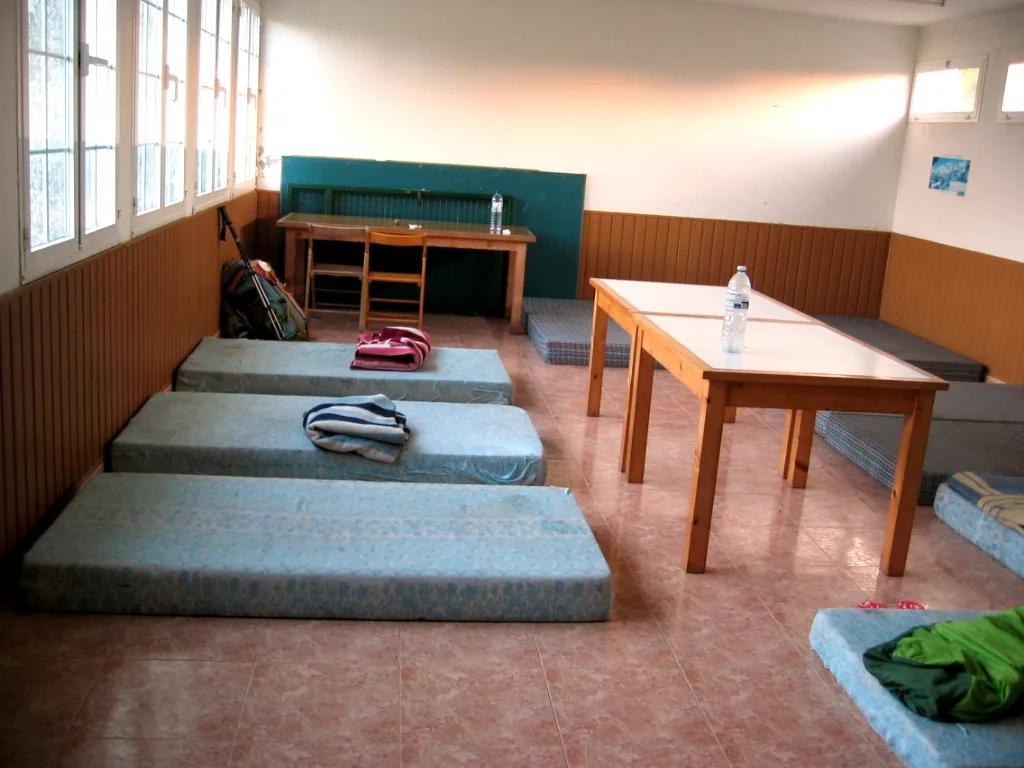
Public albergues may be run by local councils, parishes or the Xunta de Galicia. The basic offer is simple: a bed in a shared dormitory, communal bathrooms and facilities designed for people walking the Camino. Many occupy key points along the route, and some operate on a donation basis.
There are several types of private accommodation. A private albergue retains much of the communal experience and usually offers bunk beds, while a hostal, pensión or casa rural provides double rooms or other small rooms, sometimes with a private or semi-private bathroom.
So the choice is not simply between a bunk and a private room. You can also choose a private albergue, secure a bed in advance and still enjoy some of the pilgrim atmosphere. Before deciding, check the room and bathroom options offered by each property in the albergue and services directory.
How much does each type of accommodation cost?
Prices vary between networks, towns and properties; donation-based accommodation also calls for a contribution. Check the current rate at your stop before budgeting and allow for an alternative. The Xunta de Galicia public network lists a rate of €10 per person per day; check it before travelling.
For private accommodation, compare the final price per person or room and what it includes: bathroom, bedding, breakfast and cancellation terms. A room does not guarantee quiet, and a private albergue may have shared dormitories.
The difference may seem small for a single night, but it adds up from stage to stage. Before booking the entire route, factor accommodation into your overall Camino budget and leave some flexibility in case you need a more restful night.
How to balance cost and comfort
Alternate when you need to, without percentages or a compulsory private night every few days. If poor sleep affects your recovery, change accommodation before more fatigue builds up.
This does not need to be a rigid schedule. Book private accommodation when it will make the biggest difference: after several nights in shared rooms, when you notice you are not sleeping well, or before a stage you want to tackle with more energy. If you sleep soundly in a bunk, you can stay in public albergues more often and save money.
Where will you sleep better?
Private accommodation has the edge if you are looking for peace and privacy. Double rooms and other small rooms mean fewer interruptions, while a private or semi-private bathroom saves you some of the waiting and bustle that come with shared facilities.
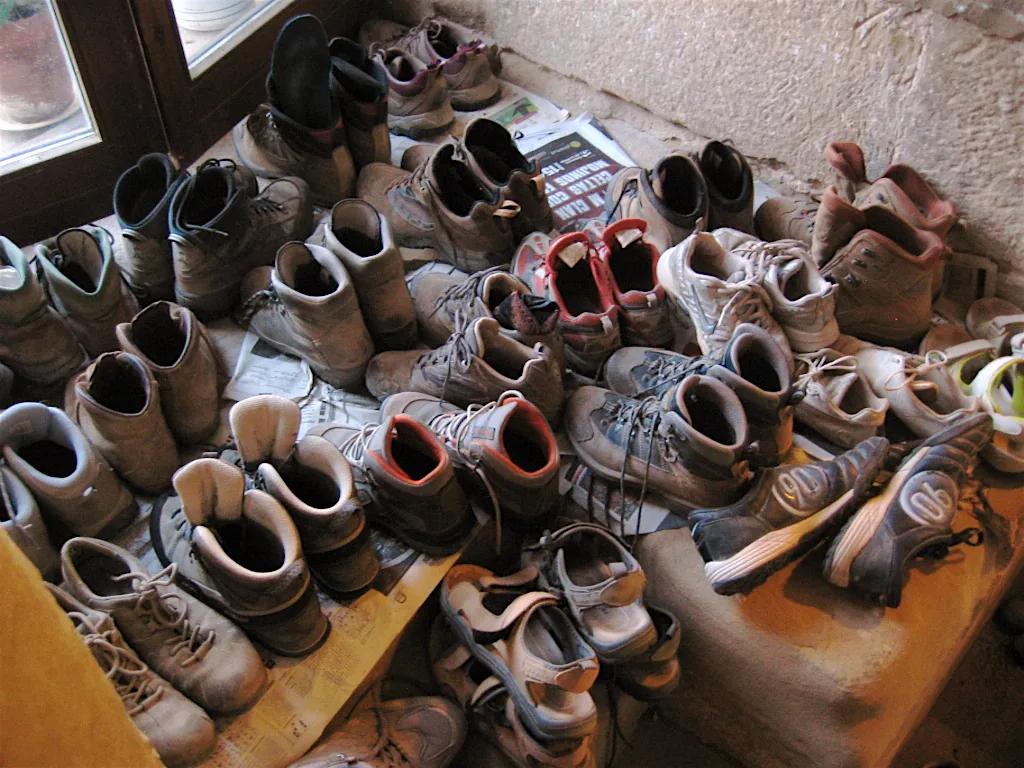
In a public albergue, you may share a dormitory with 20-60 people. There will be people coming and going, as well as snoring, and the quality of your sleep depends as much on how easily you drift off as it does on the group's behaviour. For some, this is a natural part of the experience; for others, three nights in a row are enough for tiredness to set in.
Ask the specific property about check-in, closing and departure times. Also confirm whether you can re-enter at night; public or private does not mean unrestricted hours.
Your need for comfort may change as the journey progresses. If this is your first Camino, try a public albergue first. After two or three nights, you will have a better idea of how much the noise, lack of privacy and set hours affect you; from then on, you can decide based on your own experience.
Which option is better for meeting other pilgrims?
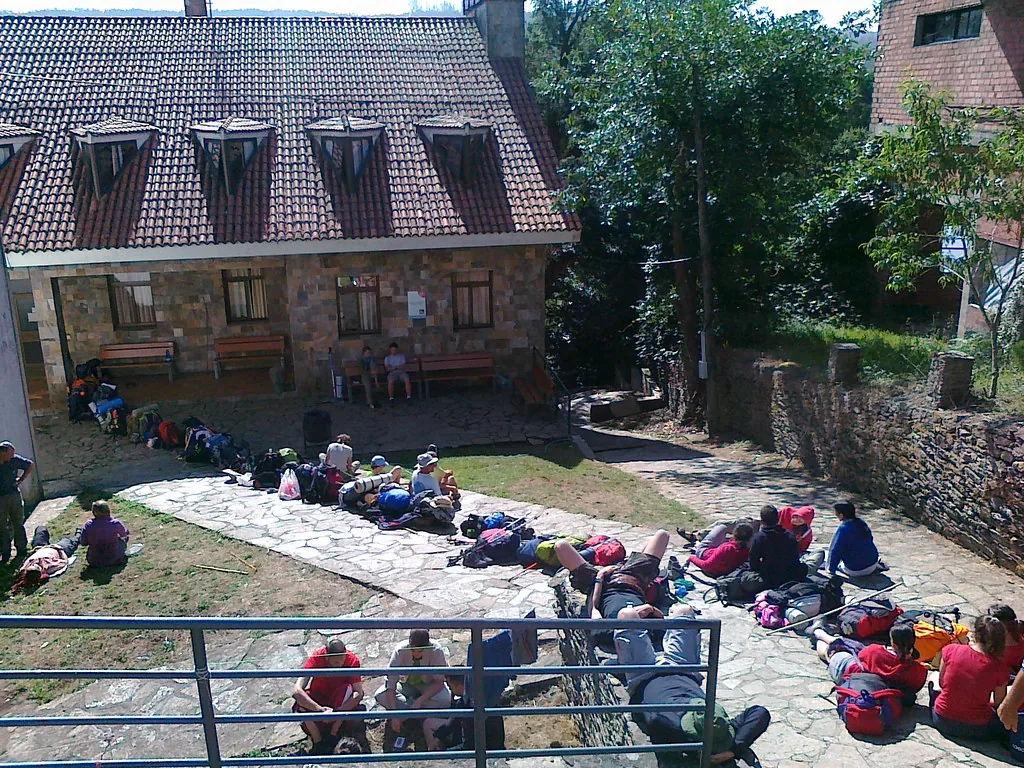
A public albergue makes it easier to socialise. Sharing a dormitory, communal areas and the same schedule means you are more likely to meet the same people, swap stories about the day's stage and naturally form a group.
A private albergue can retain some of that dynamic, especially when it offers shared dormitories. There are fewer opportunities to socialise in a hostal or pensión: you gain personal space, but spontaneous contact with fellow pilgrims becomes less common.
If you are travelling alone and want to meet people, alternating between the two works particularly well. Use albergues to join the social life of the route and private accommodation to recharge without isolating yourself throughout the journey. You can also check the Camino companion board before setting off or while you are on the road.
Can you book ahead, or do you need to arrive early?
Most public albergues do not accept bookings and allocate beds on a first-come, first-served basis. This gives you the freedom to walk without a fixed itinerary, but it also brings uncertainty: they can fill up between May and September, and arriving late may mean having to find somewhere else.
Private accommodation can be booked in advance. Knowing you have a bed takes away the pressure of racing against the clock, prevents availability from dictating the entire stage and lets you walk at a more relaxed pace. The trade-off is that a fixed booking leaves less room for spontaneity if you decide to stop earlier or continue to another village.
You do not have to choose between booking everything and booking nothing. You can reserve only the nights when rest matters most and leave the others open. To find each stage finish and see nearby alternatives, use the map of routes, stages and albergues.
Which option suits your travel style?
If this is your first Camino
Alternate when you need to, without percentages or a compulsory private night every few days. If poor sleep affects your recovery, change accommodation before more fatigue builds up.
If you are on a tight budget
Prices vary between networks, towns and properties; donation-based accommodation also calls for a contribution. Check the current rate at your stop before budgeting and allow for an alternative.
If noise keeps you awake or you need privacy
Choose hostales, pensiones or small private rooms more often. A private albergue can be a good middle ground if it accepts bookings and has smaller dormitories, although you should check the exact facilities before paying.
If you are travelling alone and want a social atmosphere
Spend more nights in albergues, especially public ones. Communal living makes it easier to meet other walkers, but it also means respecting sleeping hours and shared spaces; these albergue etiquette guidelines help make the experience enjoyable for everyone.
If you are walking the Camino between May and September
Bear in mind that public albergues can fill up. If you do not want to rely on arriving early enough, combine public beds with private bookings at the stage finishes that matter most to you.
How to choose where to stay each night
Before deciding, weigh up four things: your available budget, quality of sleep, need to book and desire to socialise. If saving money and meeting people matter most, look for a public albergue; if you need a guaranteed bed and more privacy at night, choose private accommodation.
- Choose a public albergue: if you want to spend less, meet pilgrims and are happy to share dormitories and bathrooms.
- Choose a private albergue: if you want to book ahead, retain some communal atmosphere and pay a little more for greater peace and quiet.
- Choose a hostal or pensión: if a small room, more privacy and flexible hours are your priorities.
- Alternate between them: if you want the albergue experience without building up a sleep deficit over several nights.
Check the location too. Public albergues tend to be directly on the Camino, while some guesthouses are in the centre of the village rather than on the route itself. A short detour may be perfectly manageable, but it is best to know about it before finishing the stage.
If you are walking through Galicia, read about how the Camino's public albergue network operates. This will help you include its properties in your plans without confusing them with privately run options.
Booking without forcing a longer stage
Before paying, check on the map where the accommodation is and how far it is from your previous stop. A booked bed helps you walk calmly, but should not force you to continue when you are exhausted or your foot hurts. Ask about changes and cancellations and keep a contact handy. For a more manageable route, check how to divide the Camino into short stages, then confirm that accommodation is open at every overnight stop. For public albergues that require it, carry your pilgrim credential and check that network’s admission rules.
Frequently asked questions
Can you book public albergues?
Most cannot be booked: they operate on a first-come, first-served basis. If you need a guaranteed bed, look for a private albergue, hostal, pensión or casa rural that accepts bookings.
How much does a public albergue cost on the Camino?
Prices vary between networks, towns and properties; donation-based accommodation also calls for a contribution. Check the current rate at your stop before budgeting and allow for an alternative. For private accommodation, compare the final price per person or room and what it includes: bathroom, bedding, breakfast and cancellation terms. A room does not guarantee quiet, and a private albergue may have shared dormitories. The Xunta de Galicia public network lists a rate of €10 per person per day; check it before travelling.
Does a private albergue have single rooms?
Not necessarily. It may offer bunk beds and shared dormitories just like a public albergue, although it accepts bookings and may have smaller rooms. Always check what type of bed, room and bathroom is included.
Do you have to sleep in albergues to experience the Camino?
No. You can stay in private accommodation throughout or mix and match according to how your body feels, your budget and your preferences. Choosing a better night's sleep does not make your Camino any less meaningful.
What should you do if the public albergue is full?
Look for a bed in a private albergue, hostal, pensión or casa rural in the same town or village. Checking the alternatives before you begin the stage will help you respond more calmly if there are no beds left.
Start by finding accommodation at your planned stage finishes in the albergue and services directory. Mark one public and one private option at each key stop: you will still have the freedom to improvise, but you will not be left without a backup plan.
Cover photo: neil cummings · CC BY-SA 2.0 · WebP.