












Camino Albergue Etiquette: The Essential Rules
In brief
Camino albergue etiquette comes down to one simple principle: get your rest without disturbing anyone else's. Prepare your things in advance, take care of your personal hygiene, keep to your own space and move conversations to the common areas whenever someone is sleeping.
Camino albergue etiquette comes down to one simple principle: get your rest without disturbing anyone else's. Prepare your things in advance, take care of your personal hygiene, keep to your own space and move conversations to the common areas whenever someone is sleeping.
At a glance
- Pack your backpack the night before if you plan to leave early.
- Keep quiet from 22:00 onwards, and avoid lights and conversations in the dormitory.
- Leave the bathrooms, kitchen and common areas as you would like to find them.
- Use earplugs, accept that people snore and do not save bunks for anyone who has not arrived yet.
What are the basic rules at a Camino albergue?
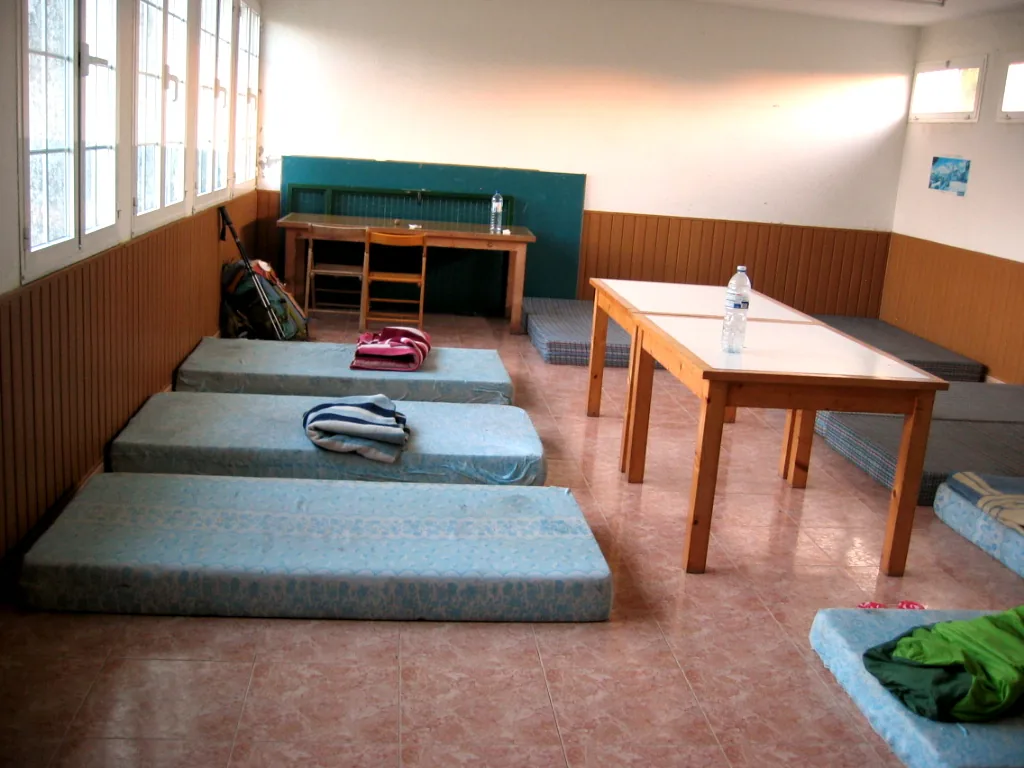
Communal living works when every pilgrim tries to leave as little trace as possible in shared spaces. That means keeping your voice down, not letting your belongings spread beyond your bunk, following the albergue's instructions and clearing up anything you use.
Not every place offers the same atmosphere or operates in the same way. Before deciding where to sleep, it is worth understanding the differences between public albergues and private accommodation and checking the specific conditions at your chosen place.
Do not occupy a bunk to hold a place for someone who has not been admitted yet. A formal booking, where offered, is made through the accommodation’s booking channel; placing a backpack on another bed is not a substitute.
How can you avoid waking others in the morning?
In many albergues, the earliest pilgrims start getting ready at around 6:00. If you want an early start, close up your backpack the night before, lay out the clothes you will wear and make sure you know where your footwear and essential items are.
When you get up, avoid switching on the main light, talking or rummaging through bags in the dormitory. If you need your head torch, use its red-light mode and point it towards the floor. Finish adjusting your backpack and have breakfast outside the room.
Packing carefully also cuts down on noise and endless searching. A lightweight Camino packing list will help you bring only what you need and keep the small space around your bunk tidy.
What should you do if you arrive late at the albergue?
Galicia’s public network publishes opening hours of 13:00–22:00, with departure before 8:00. These hours do not describe every albergue on the Camino. Confirm opening, closing and arrival arrangements with your accommodation; a booking does not mean access outside opening hours.
If you enter after the dormitory has gone quiet, save conversations for the common area, use as little light as possible and put your things away without emptying your entire backpack. You can find alternatives in advance with the albergue and services directory.
How should you handle hygiene in bathrooms and dormitories?
Leave the bathroom as you would like to find it: take your belongings with you, dry the floor if you have splashed it and do not treat a shared shower like a private changing room. Bring shower sandals, and avoid hanging clothes in walkways or common areas.
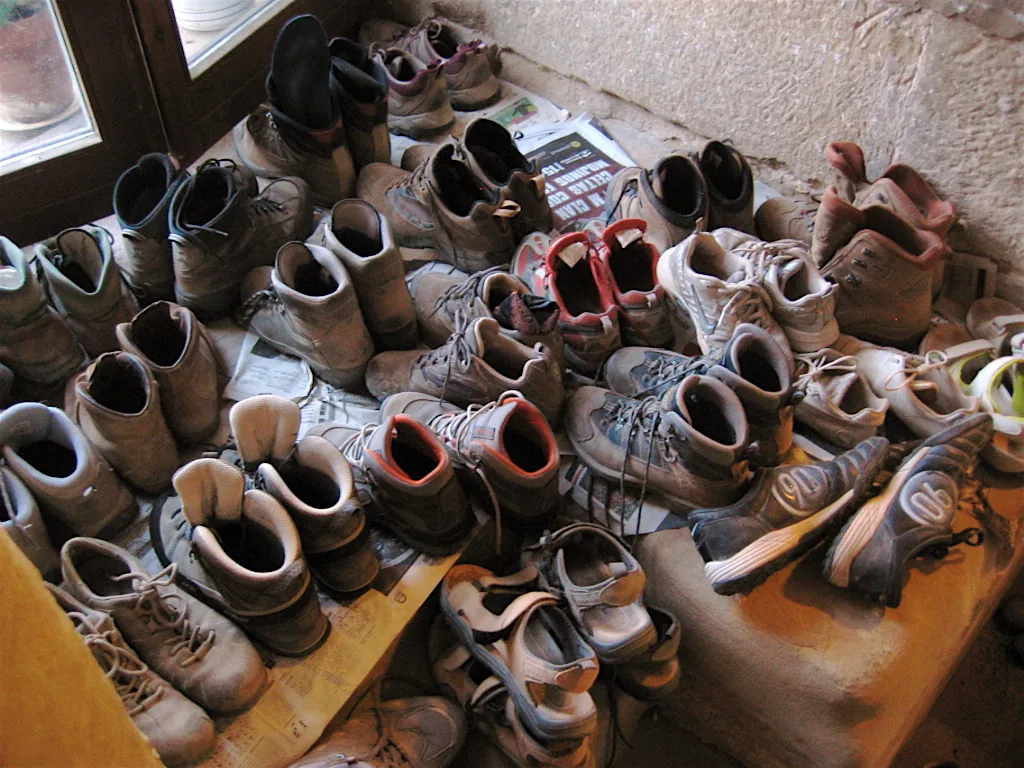
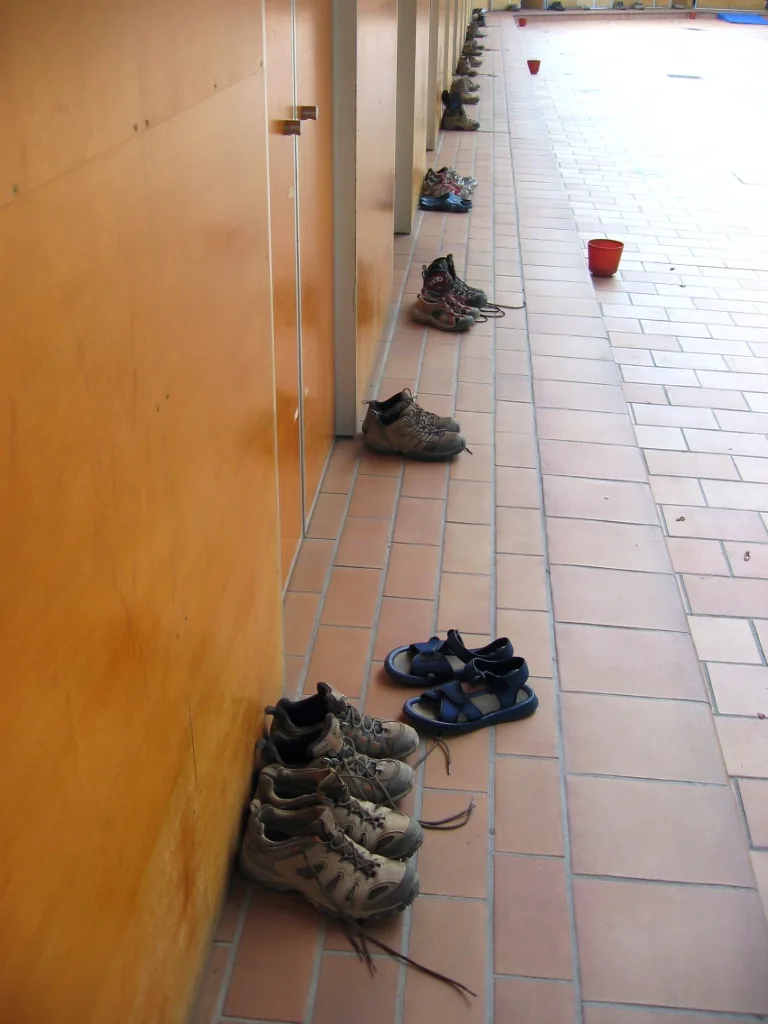
Wet or sweaty boots should be aired outside the dormitory whenever the albergue's rules and available space allow it. Keep your footwear and backpack together so nobody trips over them while moving around in low light.
These small courtesies matter all the more across a network used by so many pilgrims. If you are walking through Galicia, find out how the Camino's public albergue network works before planning your final nights.
How should you use the kitchen and common areas?
If you cook, wash the utensils immediately, wipe down the surface you used and make room for the next person. Do not assume somebody else will clear up later: one abandoned mug or pan is enough to bring a small kitchen to a standstill.
Common areas are the right place to chat, make phone calls or prepare for the next stage. The dormitory should be reserved for sleeping, especially after 22:00. If you want someone to share more than just dinner with on the Camino, the travel companion board can help you find pilgrims with compatible plans.
What should you do about snoring and other noises?
Snoring is part of sleeping alongside strangers and is not a deliberate act of disrespect. Bring earplugs, be patient and avoid waking or embarrassing the person who is snoring.
What you can control is your own noise: mute notifications, do not play videos or audio without headphones and leave the dormitory to have a conversation. If you need to get up during the night, make sure you have a clear path to your things beforehand.
Rest is part of the stage too
If several bad nights pile up, adjust the next walking day before turning the journey to the albergue into a race. The short stages guide helps spread the effort without forcing everyone to keep the same pace. If you walk with others, agree on a budget, rest needs and booking arrangements; see how to organise a group Camino. Keep identification and your credential ready when the accommodation requires them. If you need quiet, accessibility or a particular bed, ask beforehand: courtesy helps everyone live together, but it does not guarantee services or places.
Frequently asked questions
What time do quiet hours begin at an albergue?
As a general rule, keep quiet from 22:00, which is also the curfew at many albergues. The individual property's rules take precedence, so check them when you arrive.
Can I pack my backpack first thing in the morning?
It is best to have it ready the night before. In the morning, quietly pick up the essentials and make any final adjustments outside the dormitory.
Can I save a bunk for someone else?
Do not occupy a bed the accommodation has not assigned. If it allows bookings for someone else, use the official channel and its conditions; reception follows the admission rules.
Where should I leave my boots overnight?
Leave them in the area designated by the property and, whenever possible, outside the dormitory so they can air. Place them neatly without blocking doors or walkways.
What should you check before choosing an albergue?
Check the opening hours, type of accommodation and location before finalising your stage. You can browse the albergues on the French Way or explore other options on the main map.
A useful next step is to mark where you want to finish each day and review the available accommodation on the map of routes, stages and albergues. Having two options in mind takes the pressure off and lets you arrive with enough time to settle in without disturbing anyone's rest.
Cover photo: neil cummings · CC BY-SA 2.0 · WebP.