













Walking the Camino de Santiago in a group: how to plan it
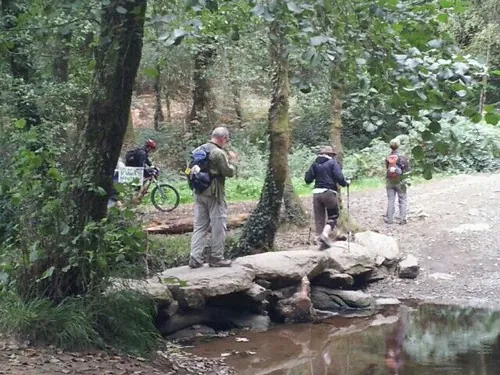
Walking the Camino de Santiago in a group can make logistics easier, provide reassurance and turn every stage into a shared memory. It can also magnify differences in pace, budget and expectations. The key is not to walk together at all times, but to agree beforehand how decisions will be made and where the group will meet again. Write down the route, stages, bookings, expenses and a plan for anyone who needs to stop.
Decide what kind of trip you want before choosing a route
A group of friends can picture the same Camino in completely different ways. One person wants an early start and a fast pace; another would rather enjoy breakfast, visit churches and arrive late. Discussing these differences before booking stops every stage from becoming a negotiation.
Everyone should answer four questions: how many days they have, how far they can walk comfortably, what their budget is and how much rest they need. Add accommodation preferences, interest in earning the Compostela and tolerance for rain, heat or steep climbs. Do not choose a route until you can see where the answers overlap.
Use Plan Your Camino to compare options and check the route map. If it is the first Camino for most of the group, the guide to choosing your first Camino will help you separate popularity, difficulty and logistics.
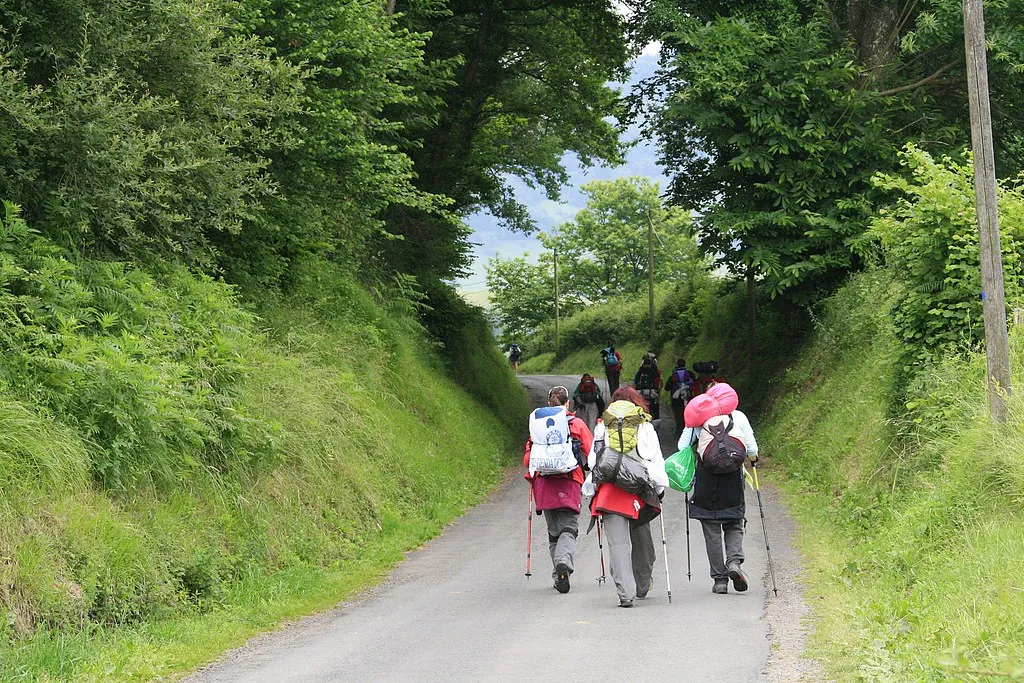
Which routes work best for groups
French Way: the most flexible option
The French Way has more towns, accommodation and transport than other routes. This network makes it easier to split up, shorten a stage or deal with an injury. The trade-off is that popular sections require advance booking when several people travel together.
The route from Sarria fits into one week and gives everyone a clear shared goal. It is also very busy in summer, at Easter and during other holiday periods. If this is your choice, read the guide to the last kilometres from Sarria and do not rely on finding several beds together without a booking.
Portuguese Way: easy access and adaptable stages
The Portuguese Way from Tui works well for groups thanks to its transport links and frequent towns. Starting in Porto offers a longer experience. Hard surfaces on some sections can be tough on feet and joints, so training is advisable.
Decide in advance whether you will follow the Coastal or Central route. Switching variants without checking accommodation can split the group by accident. The comparison of the Central and Coastal Portuguese Way will help you choose using shared criteria.
English Way: a compact week
The English Way from Ferrol usually takes five to seven stages. It suits a group with just one common week of holiday. There are climbs and places with limited accommodation, so booking for several people takes some planning.
Camino Primitivo and Northern Way: for trained groups
The Camino Primitivo and the Northern Way offer beautiful scenery and fewer crowds on many sections, but their elevation and weather make them more demanding. Choose them if the group has trained and is comfortable walking separately for part of the day.
In the mountains, decisions should reflect both the forecast and the needs of the least confident person. Nobody should feel forced to cross Hospitales in fog or wind to avoid disappointing the others. There are valid alternatives and transport when conditions call for them.
How to plan stages for different walking speeds
The fastest person should not set the group's daily distance. Nor is it practical to make everyone walk at the slowest pace every minute. Plan a day that is manageable for whoever needs more time and let each person settle into their own rhythm.
Agree on precise meeting points: a particular café if it is open, a clearly identified fountain or the final accommodation. Avoid vague messages such as ‘see you further on’. Share your location only if everyone wants to, and remember that mobile coverage can fail.
A simple system works best:
- Start: an agreed time window, without penalising anyone who needs longer.
- Pairs or smaller groups: nobody is accidentally left alone on a difficult section.
- Checkpoints: one or two specific places, not a continuous phone conversation.
- Arrival: everyone saves the name and address of the accommodation.
- Cut-off time: the point at which you call and put the agreed plan into action.
If someone wants to walk alone for a few hours, respect that choice and set the next meeting point. Independence reduces friction. A healthy group does not use concern as a way to control every step.
Booking for several people
Finding one bed is easier than finding six. Book ahead in high season, at weekends, on stages with limited options and for the final night in Santiago. Browse accommodation along the Camino and confirm capacity, price and terms directly.
Ask whether the group will sleep in the same room or be split up, what the latest arrival time is and how an individual cancellation is handled. Details can change; keep the confirmation and do not assume breakfast, towels or luggage transfer are included.
Appoint one person to coordinate bookings and another to check the details. That does not turn the coordinator into a travel agent or make them responsible for every problem. Each person should know their nights, payments and cancellation policies.
If the group is mixing albergues and private rooms, agree on it first. The guide to albergues and private accommodation helps compare rest, shared life and flexibility.
Managing money without arguments
Discuss the budget using estimated figures and leave some leeway. One person may want a set menu and a dormitory bed; another may prefer a private room and luggage transfer. Neither choice is morally better, but they will not always be compatible in every town.
Keep shared and personal expenses separate. Accommodation, shared taxis or a group shop can go on a simple list. Individual meals, drinks and personal equipment are paid separately unless everyone explicitly agrees otherwise.
Do not leave all the bookings on one person's card for months. Ask for contributions whenever advance payment is required and settle up every few days. To estimate the trip, see the guide to the cost of the Camino and update prices before leaving.
Luggage and backpack transfer
Everyone should pack and test their own backpack. Sharing a first-aid kit or charger can save a little weight, but it creates dependence if the group separates. Identification, money, water, warm clothing and waterproofs should always stay with their owner.
If someone needs backpack transfer, the whole group does not have to use it. Confirm coverage, collection and delivery at every stage. The guide to backpack transfer explains the basic choices, but services and prices should be checked close to departure.
Prepare a small bag that stays with the person: medication, identification, water, rain protection and a phone. Transferred luggage may be delayed; essentials should not be packed inside it.
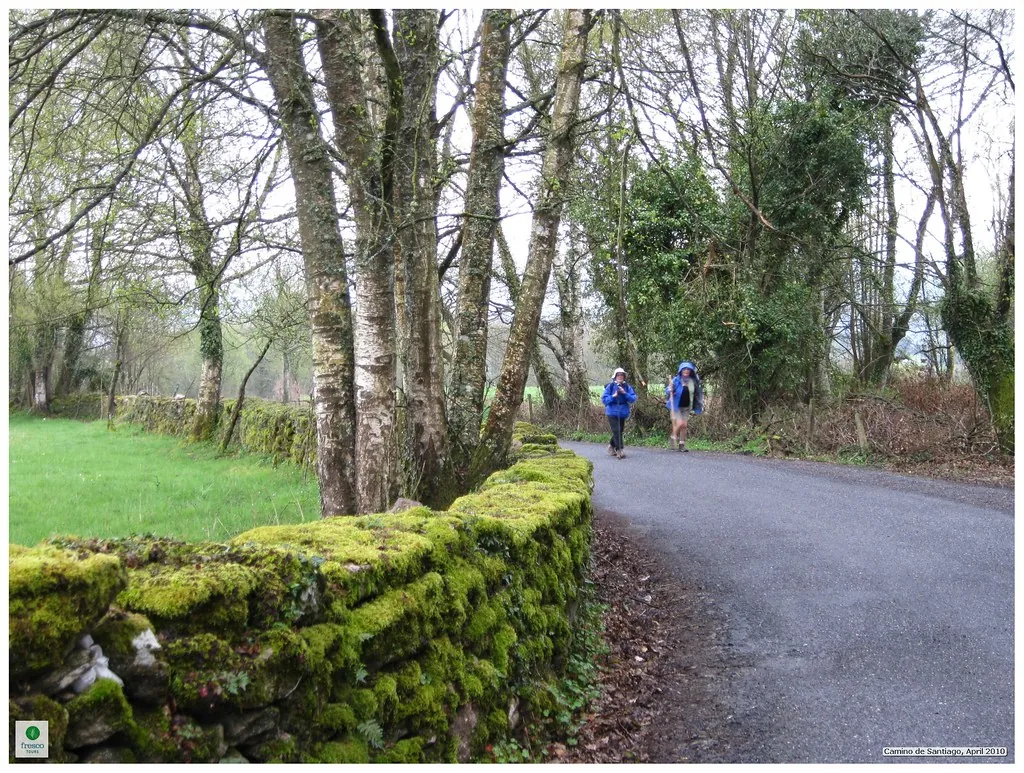
Health, injuries and an exit plan
Ask in advance about allergies, relevant medication and an emergency contact, while respecting privacy. Anyone with a medical condition should carry their treatment and any necessary professional advice. The group can offer support, but it cannot replace healthcare.
Stop early when a blister or pain appears. Pressure not to hold others up turns minor discomfort into an injury. The guide to preventing and treating blisters helps establish a shared routine without sharing items that should remain personal.
Agree what happens if someone cannot continue. They might take transport to the accommodation, rest for a day or go home. Decide whether somebody will accompany them and how costs will be shared. Having a plan does not invite trouble; it prevents arguments under stress.
Adjust the stage in heat, storms or severe weather alerts. A majority vote does not make a crossing safe. Everyone must be free to opt out without mockery or pressure.
Getting along in and outside the albergue
A group takes up more room and makes more noise without noticing. Do not block corridors, bathrooms or power sockets; pack outside the sleeping area whenever possible. The guide to albergue etiquette can serve as a common agreement.
Avoiding conflict does not mean doing everything together. Leave free time to eat, explore or rest separately. One shared dinner may be enough to preserve the group feeling without turning every decision into a meeting.
Raise concerns before they build up. Talk about a specific action and its effect, not someone's personality. ‘I need us to confirm tomorrow's start tonight’ works better than ‘you always make a mess of everything’.
How to make decisions on the Camino
Assign areas of responsibility before leaving. One person can check the weather, another the bookings and another transport, but the information must be available to everyone. Rotating jobs prevents one person from carrying the full organisational load.
For safety decisions, follow official warnings and choose the cautious option. For preferences, look for a reversible solution: split up for one stage, eat in different places or meet in the next town. Not every difference needs a winner.
When a booking requires the group to stay together, set a deadline for deciding on changes. If you need recent first-hand information about a section, ask in the forum, then confirm the details with the accommodation or transport provider.
Walking with people you do not yet know
Peregrinia lets you find people whose route and dates match yours through Travel Companions. Post the section, month, approximate pace and kind of trip you want. A specific description produces more useful matches than ‘looking for nice people’.
Talk on the platform first and, if you wish, arrange a video call or a walk beforehand. Do not send money for shared bookings without checking identity and terms. Meet in a public place for the first time, and make sure someone you trust knows your plan.
The guide to finding Camino companions covers this stage in more detail. Even when everything fits, keep the option of continuing separately. A match does not create an obligation to stay together.
Groups with children or different needs
When children are travelling, adapt stages, breaks and accommodation to them. A route that suits trained adults may not suit a family. Read the guide to the Camino with children and do not delegate supervision to other pilgrims.
For people with reduced mobility, previous injuries or sensory needs, check every section and accommodation individually. The label ‘accessible’ says nothing about gradients, kerbs, bathrooms or transport. Confirm every important condition directly.
A diverse group works when it can split a stage without penalising anyone. Transport, rest days and private accommodation are tools, not failures. The shared goal should allow different ways of taking part.
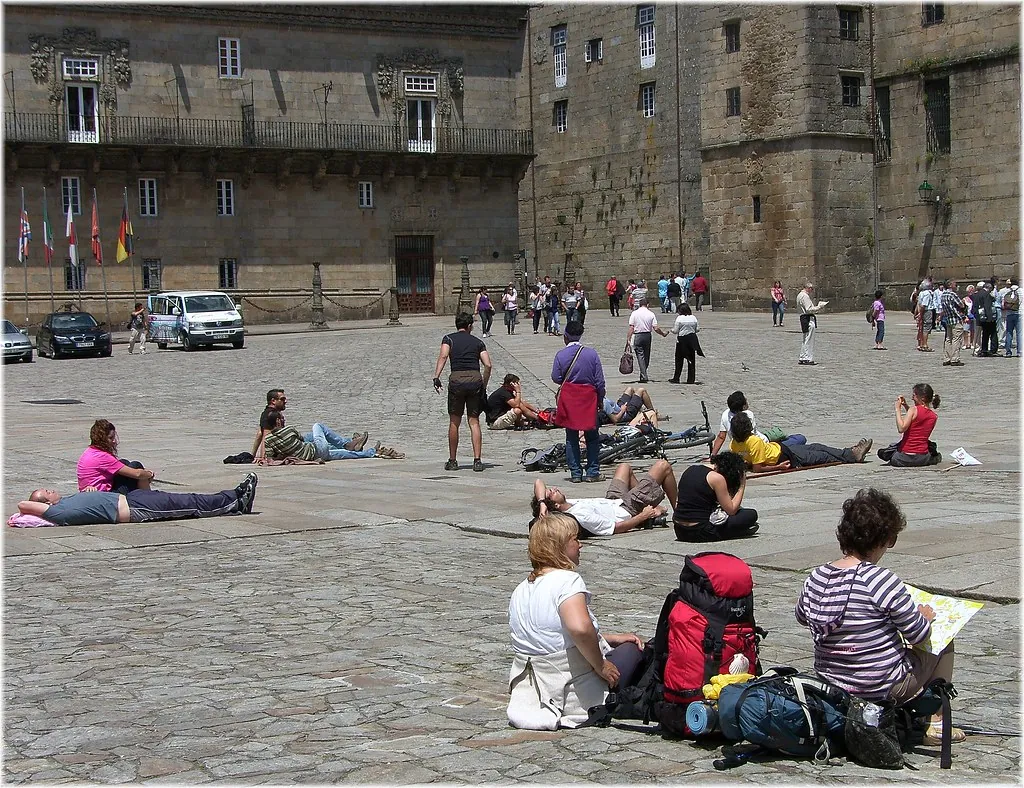
Arriving in Santiago
Agree whether you want to enter together and where you will wait. Different paces can split the group on the final stage, while the urban approach has crossings and noise. A precise spot before the historic centre lets you regroup without making anyone walk uncomfortably.
The Compostela is an individual formality even when the journey is shared. Check the current requirements and make sure everyone carries their own pilgrim passport. Afterwards, allow free time: not everyone will want to attend the same events, visit the same places or celebrate in the same way.
If the journey continues to Fisterra, treat it as a new route and check availability. The Fisterra Way adds more days and effort; it should not become a compulsory extension at the last minute.
Frequently asked questions
What is the ideal group size?
There is no universal number. Once several people are involved, bookings and decisions become less flexible. In a large group, share responsibilities and be willing to walk in smaller groups.
Do we have to walk together all the time?
No. Agreeing on pairs, meeting points and the final accommodation is more practical. Nobody should be left alone by accident, but a person can choose their own pace when the group knows the plan.
Who should make the bookings?
One person can coordinate them and another can check them, but everyone must know the terms and payments. Share advance costs and do not make the coordinator personally responsible for every change.
What should we do if someone is injured?
Stop, assess the situation and seek professional help when appropriate. Follow the agreed plan: transport, rest or returning home. Do not pressure anyone to continue just to preserve a booking.
How can we avoid arguments about money?
Agree on a budget and which costs are shared before leaving. Keep a simple record, settle it every few days and keep personal spending separate.
Is it safe to form a group with strangers?
It can be done carefully: talk first, meet in public, share the plan with someone you trust and remain financially independent. If someone's behaviour makes you uncomfortable, leave and ask for help.