







How Much Does the Camino de Santiago Cost? Full 2026 Breakdown
In brief
Work out the cost of the Camino per person and per day using your dates and accommodation choices.
Work out the cost of the Camino per person and per day using your dates and accommodation choices. There is no single rate or official budget for 2026. Separate travel from home, equipment and optional services. The examples below are assumptions to show how to calculate a budget, not guaranteed prices.
How much should you budget for the Camino de Santiago?
Three hypothetical examples for 33 days: allowing 30 EUR a day for accommodation, food and small expenses gives a subtotal of 990 EUR; 45 EUR a day gives 1,485 EUR; 70 EUR gives 2,310 EUR. These are planning assumptions: they do not mean that beds, meals or rooms will always be available at those amounts. Check prices at your stops before choosing one, then add outward and return travel, advance purchases, bookings and a buffer for changes. On the French Way, 33 days is an example here, not a required duration. Compare albergues and private accommodation to decide where to spend and where to save.
How much does accommodation cost per night?
The official website lists 10 EUR per person per day for the Xunta public network in Galicia. This rate does not apply to every municipal, parish or private albergue on the Camino and does not guarantee a bed. Check who manages each property and review its conditions before setting off.
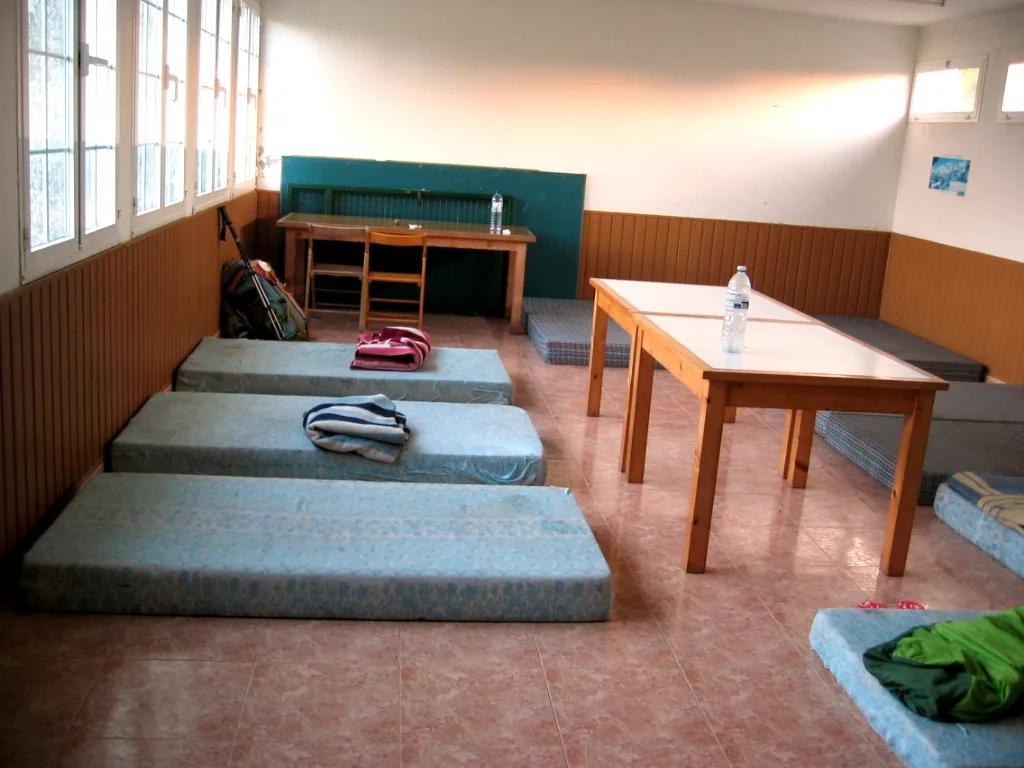
Private albergues, guesthouses, hotels and casas rurales offer more booking options and privacy, but there is no single standard rate. Prices vary by location, season and room type, so check the actual cost for your dates instead of copying someone else's budget.
How much will you spend on food during the Camino?
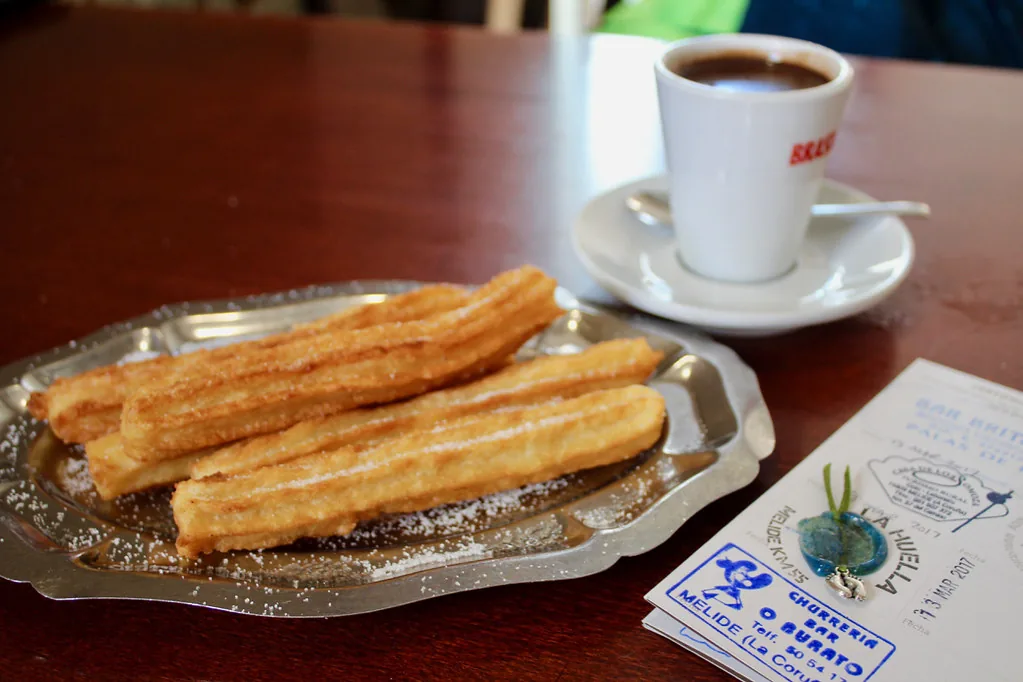
There is no universal or official price for a pilgrim menu. Check recent menus or ask what is included: drinks, dessert, breakfast and supplements can change the bill. If you plan to cook, confirm that there is a usable kitchen and utensils; having a kitchen does not necessarily mean you can prepare a full dinner.
Do not budget for dinner alone. Breakfast, lunch, water, snacks and unplanned purchases all count. Our guide to eating on the Camino will help you plan what to eat without carrying too much or always relying on bars and restaurants.
Which extra costs are often overlooked?
Set aside the cost of travelling to the start of the route and returning from Santiago from the outset. These expenses depend on where you are travelling from and cannot be covered by a universal estimate.
- Gear: footwear, backpack, clothing and any replacements you need along the way.
- Laundry: washing and drying when you cannot do it by hand.
- Health: pharmacy supplies, foot care and insurance.
- Optional services: luggage transfers, private rooms or reservations.
- Unexpected expenses: changes to your stages, additional nights and unplanned transport.
Check the ultralight Camino packing list before buying anything. Using what you already own and avoiding unnecessary items is good for both your budget and your back.
How your route affects the total cost
Duration affects the cost more than the route's name. Count actual nights, rest days and your arrival in Santiago; a walking day does not necessarily equal a night of accommodation. Compare the French Way and English Way using your dates and stages rather than transferring one total to the other.
How to create a realistic Camino budget
- Choose your route and stages: decide how many days you will walk and where you want to finish each one.
- List your planned accommodation: distinguish between nights in public albergues and those when you would prefer more privacy.
- Decide how you will eat: combine cooking, grocery shopping and pilgrim menus according to the services available in each place.
- Add transport and gear: include them even if you pay for them before you start walking.
- Leave room for unexpected expenses: do not commit all your money in your initial calculation.
Search for accommodation and services in the Camino places directory. Checking each stop prevents you from budgeting for kitchens, shops or cheap beds that may not be available.
How to save money without spoiling the experience
- Alternate accommodation types: book extra comfort for the days when you will genuinely benefit from it.
- Shop with a plan: cook only when the albergue has the right facilities, and avoid carrying food over several stages.
- Bring tried-and-tested gear: an emergency purchase caused by unsuitable footwear can add both expense and discomfort.
- Keep track of small payments: note them down at the end of each day so you can adjust the next day's spending without worrying.
- Share when it makes sense: travelling with someone can make it easier to split some purchases or rooms; the Camino companion board can help you find people with compatible dates and routes.
A budget you can adjust as you travel
Start with costs you can check. Record the price of every booked night and its cancellation terms; for other nights, keep a realistic option and an alternative. Do not budget every night at the cheapest bed's rate if it cannot be reserved. A full town may mean paying for different accommodation or changing your stage, which can also cost money.
Next, calculate food separately. Include breakfast, lunch, dinner and snacks rather than multiplying the price of one set meal. When sharing groceries or a room, agree how to split the bill and calculate your share, not the group's total. Do not assume that travelling together always saves money: rooms and services may charge per person.
Suppose, purely as an exercise, you choose 45 EUR for 33 days: 1,485 EUR. Adding a 150 EUR buffer gives 1,635 EUR for the route, before travel from home and equipment you still need to buy. That buffer is an assumption, not advice that suits everyone. If your bookings already cost more, change the daily amount; do not cut food or rest to fit an initial figure.
Carry a little cash and an alternative payment method. Check your bank's fees and identify places to withdraw money without unnecessary detours. Keep money for the journey home separate, even if you need to stop early. Compare actual and planned spending every two or three days; adjusting early stops the budget dictating your last stages.
The guide to short stages helps you plan walking and rest. Your budget should help you walk with peace of mind and leave room to rest or change a plan.
Who is setting off on your dates
To Santiago
Written in SpanishPrimera vez lo hago solo,si alguien se apunta...llevo mucho tiempo queriendo hacerlo...
- Distance
- 771 km
- Stages
- 33
- Languages
-
From Porto to Santiago
Written in PortugueseOlá! 😊 Eu sou a Gabriele, tenho 25 anos, sou brasileira e moro no Porto há 6 anos. Sempre tive muita vontade de fazer o Caminho de Santiago, mas acabava adiando por nunca ter companhia. Desta vez decidi que não quero mais esperar e estou à procura de alguém para dividir comigo essa aventura! Adoro viajar, conhecer lugares novos, tirar muitas fotos, conversar sobre tudo e conhecer pessoas diferentes. Acho que uma das partes mais bonitas do Caminho é justamente poder compartilhar histórias, momentos e experiências com alguém pelo caminho. Não estou à procura de alguém que tenha necessariamente o mesmo ritmo ou experiência, seria a minha primeira vez também! Quero apenas encontrar uma pessoa tranquila, divertida e aberta a viver essa experiência juntas, com direito a boas conversas, risadas, paisagens lindas e, claro, muitas fotos e vídeos para guardar de recordação. Se também estás a pensar fazer o Caminho e procuras companhia, manda-me uma mensagem! 💚 Buen Camino!
- Distance
- 241 km
- Stages
- 10
- Languages
-

 Organised by
Alina L.
From Luarca to Santiago
I am doing this for the 4th time Looking for likeminded people to share the experience
5 places left
- Distance
- 245 km
- Stages
- 11
- Languages
-

Frequently asked questions
Is 600 EUR enough for the whole Camino?
That cannot be guaranteed. Divide your money by your planned days and check whether it covers actual accommodation, food and extras. For a long route, do not rely on old rates or forget the journey home.
What does it cost per person?
It depends on nights, meals and services. Multiply a checked daily allowance by the number of days, then add travel, equipment and a buffer.
Which costs more, accommodation or food?
That depends on where you sleep and how you eat. Count every meal: a cheap bed does not make the whole day cheap.
Do the examples include outward and return travel?
No. The daily amounts of 30, 45 and 70 EUR are assumptions for expenses on the route; add travel from home and back separately.
Cover photo: neil cummings · CC BY-SA 2.0 · WebP.