












Camino de Santiago with children: stages that fit your family
The Camino de Santiago works best with children when the itinerary fits them, rather than asking them to fit the itinerary. Choose a section with services, split long stages, plan breaks and keep a realistic option to stop. The Galician authorities stress the need for shorter walking days suited to age, with attention to water, sun protection and rest. You do not have to complete an entire route or pursue the Compostela to enjoy the trip.
Before choosing a route: test your family's pace
Age alone does not decide how far a child can walk. Their walking habits, the terrain, heat, weight carried and chances to rest all matter. Try walks on ground similar to your planned route, in the footwear they will wear and with a proper break. Two consecutive days are especially useful: the second shows how they cope when tiredness builds up.
Ask what they enjoy and what bothers them. A child who likes looking for waymarks but feels overwhelmed in a shared dormitory needs a different plan from one who wants to meet other pilgrims. If there are health conditions or questions about exertion, speak to their healthcare professional before the trip. A published family mileage figure is not a prescription for every child.
In its family Camino guide, Correos suggests choosing routes with services and preparing with walks beforehand. That is useful guidance, but your daily distances should come from your actual experience, not an average.
Choose a section with exit options and places to stay
Prioritise intermediate towns, ways to leave the route and places where you can eat and sleep before the usual stage finish. The French Way has many settlements, but its conventional stages are still designed for adults. The route and stage map helps identify possible stopping points; then check whether there is lodging and a practical way to reach it from the trail.
You could also consider a section of the Portuguese Way. Compare the actual elevation profile, roads, gaps between villages and transport, instead of trusting a broad “easy route” label. Choose a trip length that includes travel to the start and home from the finish; those are not full walking days.
If you plan to start in Sarria, use the usual breakdown to Santiago only as a reference. The conventional Palas de Rei to Arzúa day is long; with children, splitting it or giving up a fixed arrival date may make sense. The success of your plan does not depend on finishing the five standard stages.
How to build a family walking day
Set a nearby main destination and mark two alternatives: somewhere you can stop earlier and another place to reach only if everyone still feels comfortable. Decide in the morning based on weather and rest. A day with several breaks may take most of the daylight even over a short distance; leave time to eat without rushing and for a quiet afternoon.
- Starting out: avoid walking in the dark and check the forecast, waymarks and water points. The Guardia Civil advises pilgrims to follow signs and take particular care on roads.
- On the trail: offer frequent breaks, water and a shady place to rest; walk at the pace of the slowest person.
- Checking in: ask about fatigue or discomfort before it becomes distress or low spirits. Changing the plan is no failure.
- Arriving: leave time for a shower, food and play or rest. A rushed finish makes the next day harder.
At crossings, on road shoulders and anywhere with traffic, keep children close and explain the rules before you reach the difficult spot. Make room for other walkers and cyclists on shared trails. An adult should know what to do if the group gets separated: agree on a visible place to wait and carry a phone with enough charge.
Shared hostel or family room?
The choice is more about sleep and privacy than a badge of “authenticity”. Before booking, ask whether everyone will have a bed, whether children are allowed, what the bathrooms and stairs are like, and whether you can arrive at the time your pace allows. A shared hostel can be fun for older children and difficult for those who need an earlier bedtime or wake easily.
A family room or small property can make rest easier to manage, but may need booking ahead. Do not assume a “double room” fits a family or that a hostel will let people share a bunk. Confirm the actual occupancy and terms. Our guide comparing hostels and private accommodation covers the general differences; with children, check the individual property's details.
Look for somewhere near your intended finish, while keeping an alternative in an earlier town. If you would need transport between them, check that it runs on your travel date and at the time you need it. This modest preparation gives you room to stop if heat, rain or tiredness change the plan.
Kit, food and keeping children engaged
A child may carry a small pack with light items, but its weight should match what they have already tried on walks. Do not load a “pilgrim backpack” just to make them feel part of the journey. Adults organise water, weather protection and essentials; the general packing guide helps cut duplicates.
Carry food they know and find out where you can restock. Some stages pass through villages without a service open on the date or at the hour you need; check before setting off. Do not make each rest break depend on a reward at the end of the day: small pauses, conversation and time to observe often work better than an abstract destination.
To keep them interested, let them spot yellow arrows on a safe stretch, choose a photo of the day or look for places to stamp the pilgrim credential. Always supervise them near roads. The pilgrim credential can be a shared souvenir, although the Compostela has its own requirements and should not be imposed as a child's goal.
When the plan changes
If a child cannot or does not want to continue, stop first and consider whether they need rest, water, food or assistance. Do not assume “one more kilometre” will solve it. Use the earlier accommodation, transport or free day you planned for. For a health concern, consult professionals; in an emergency, call 112.
A shortened stage does not erase the walking you have done. You can return to that point on another day or end the trip there. This flexibility is particularly valuable with children of different ages: it stops the oldest setting the youngest one's pace or the youngest feeling that they have “spoiled” the plan.
Frequently asked questions
How far can children walk each day?
There is no figure that works for every child. Start with distances they already manage on practice walks, then adjust for terrain, weather and rest. Split conventional stages where needed.
Which route should we choose for a first family Camino?
A section with accommodation, intermediate towns and ways to leave the route. Assess the actual trail and your pace; a route's popularity does not replace that check.
Should we book accommodation?
If you need a family room or beds in a particular arrangement, it makes sense to confirm availability and conditions. Allow room to change town or date.
Can a child carry a backpack?
They can carry a small load they have tested beforehand, matched to their ability. Adults organise the weight and water the family needs.
What if we do not finish the Camino?
The trip still has value. You can walk a section, rest or return another year without making the Compostela an obligation.
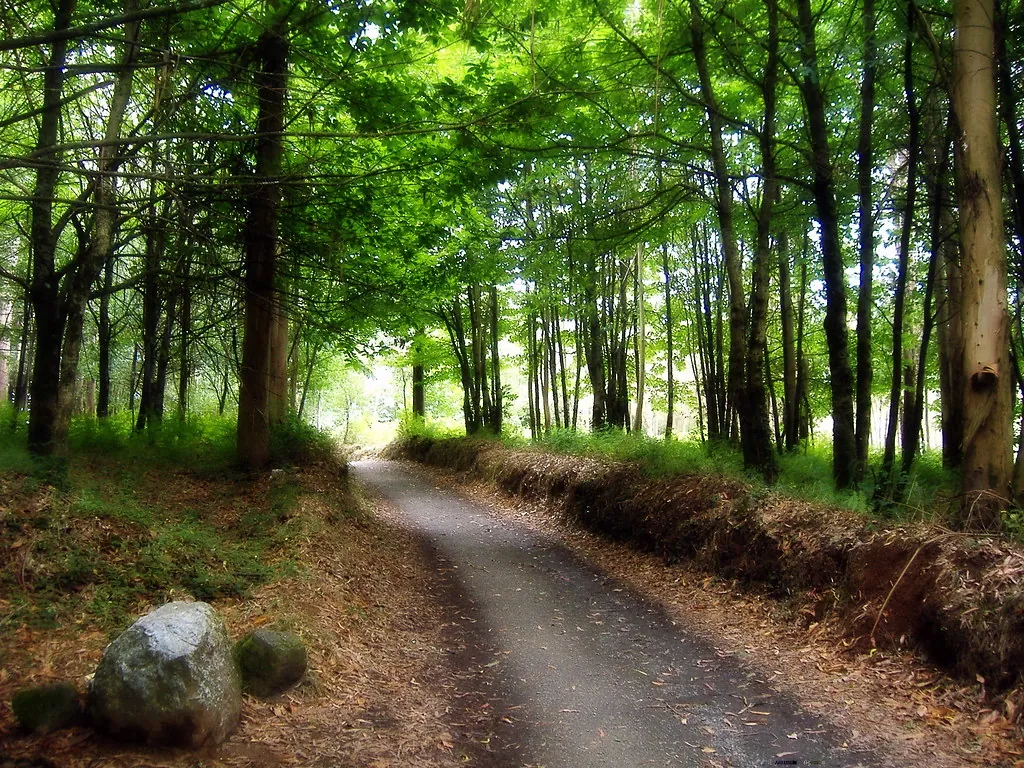
Photo: Melide — tunante80 · Public Domain Mark 1.0.