











The Botafumeiro at Santiago Cathedral
In brief
The botafumeiro is Santiago Cathedral's giant thurible: it weighs 53 kilograms, stands 1.50 metres tall and is swung across the transept by eight tiraboleiros. It does not fly every day; it is used on major liturgical feast days and when a group or confraternity requests and pays for it.
The botafumeiro is Santiago Cathedral's giant thurible: it weighs 53 kilograms, stands 1.50 metres tall and is swung across the transept by eight tiraboleiros. It does not fly every day; it is used on major liturgical feast days and when a group or confraternity requests and pays for it.
At a glance
- It weighs 53 kilograms and reaches 68 km/h in flight.
- Eight tiraboleiros operate the rope and pulley system.
- No date should be treated as guaranteed without checking current notices. The calendar includes 25 July among the planned solemnities, but confirm the celebration and access with the Cathedral.
- Outside the main feast days, check the Cathedral's calendar.
What is the botafumeiro and how big is it?
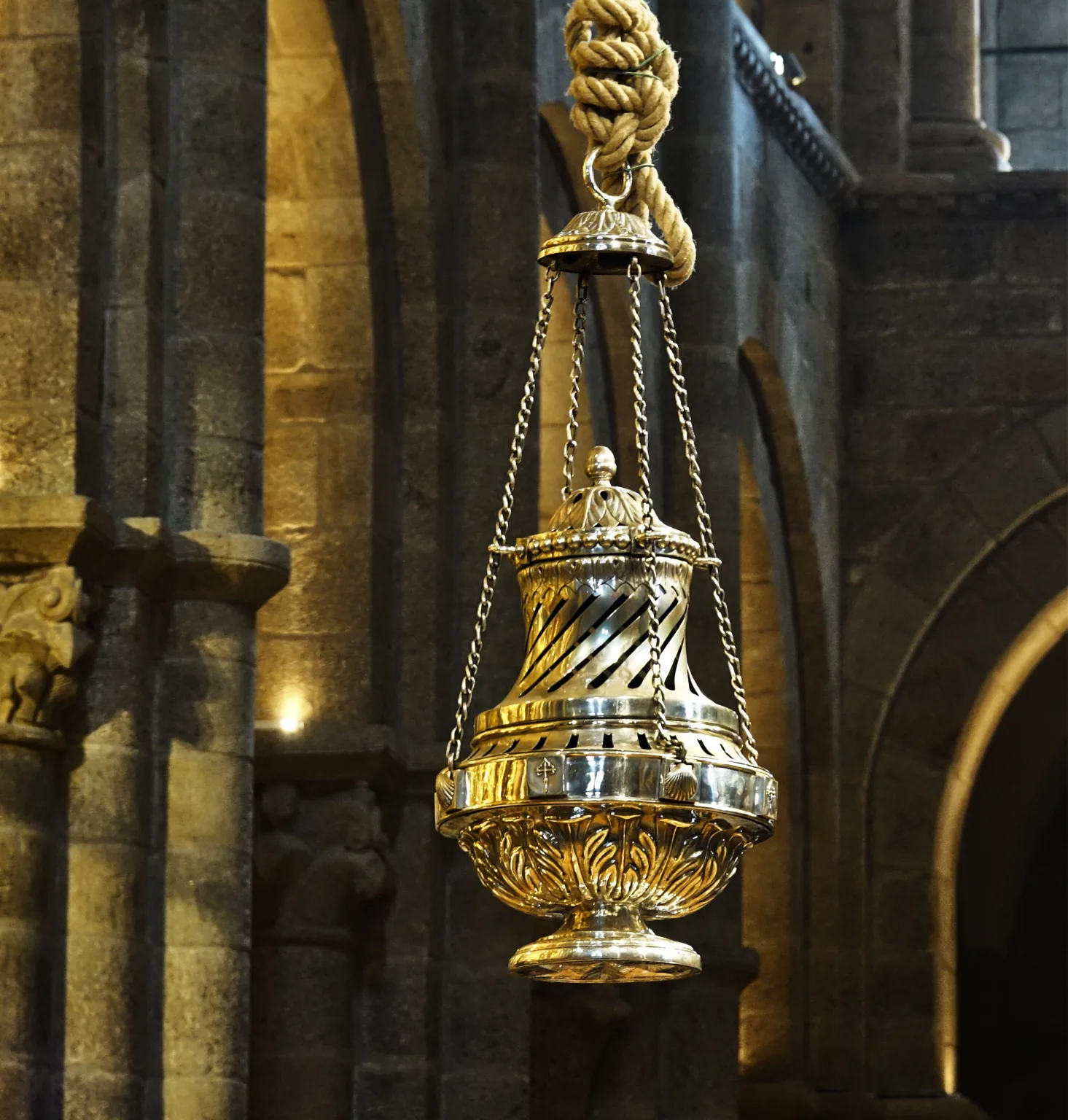
It is a silver-plated brass thurible suspended by a rope beneath the Cathedral's central dome. Its sheer size accounts for much of its impact: 1.50 metres high and weighing 53 kilograms.
It is a brief ceremony. Follow staff instructions and stay in your place; do not move across the transept looking for a better angle while it is swinging.
How does the botafumeiro work?
The botafumeiro hangs from a rope connected to a pulley mechanism. Eight men known as tiraboleiros pull it in a coordinated rhythm, gradually increasing the breadth of each swing.
This is not an automated motion, nor is the botafumeiro simply an exhibit in the Cathedral. The tiraboleiros are an integral part of the ceremony: they control the thurible's momentum until it completes its vast arc over the transept, then gradually bring the swinging to a stop.
The mechanism is inspected before every use, and rigorous safety measures are now in place. During the ceremony, follow the Cathedral staff's instructions and do not move around in search of a different angle once the botafumeiro is in motion.

What are the origins of the botafumeiro?
The earliest documentary reference cited by the Cathedral is a note in the Codex Calixtinus, naming it “Turibulum Magnum”. Distinguish that historical evidence from the popular explanation about pilgrims’ smells.
Incense has a liturgical meaning: it symbolises prayers rising to God. For the wider context of the ceremony, see the history of the Camino de Santiago.
The Cathedral holds two examples: the brass censer made in 1851 by José Losada and normally used, and a silver replica donated in 1971.
When can you see the botafumeiro?
There is no guaranteed daily flight. The Cathedral lists 25 July and other solemnities in its calendar, but check the specific celebration and any maintenance notices before travelling. Requests for its use are also accepted for consideration; do not assume approval.
Check the Cathedral’s liturgical information directly. The page brings together the calendar and notices that may affect the schedule; the high season does not guarantee a flight at an ordinary Mass.
If you plan to collect your certificate there, first check how to obtain the Compostela and have your pilgrim credential ready. That way, you can complete the formalities and confirm the botafumeiro schedule without having to improvise at the end of the day.
How should you plan your visit when you reach Santiago?
Do not assume you will be able to see the botafumeiro as soon as you finish your last stage. Whether you arrive on the French Way or another route, allow time to confirm whether a ceremony is scheduled and plan the rest of your stay with our guide to what to do in Santiago de Compostela.
If your dates do not coincide with a flight, the Cathedral is still well worth visiting in its own right. The botafumeiro is one part of arriving in Santiago, not the only one, and you should not shape the entire end of your Camino around a ceremony that may not be scheduled.
Visit the Cathedral without depending on a flight
Plan access to the church and where to leave your backpack first: you cannot enter with it. The guide to luggage storage and shipping helps separate storage, collection and your visit. If you have a flight or train afterwards, leave time to collect your belongings and leave the city; check Santiago Airport connections if needed. Do not change a ticket for an unconfirmed ceremony. A Mass, the crypt or a quiet walk through the old town can also bring your Camino to a close when the botafumeiro is not used.
Frequently asked questions
Does the botafumeiro fly every day?
No. It is used on the major liturgical feast days and when a group or confraternity pays to have it flown. At other times, check the Cathedral's calendar before making a special trip.
On which day is the botafumeiro guaranteed to fly?
No date should be treated as guaranteed without checking current notices. The calendar includes 25 July among the planned solemnities, but confirm the celebration and access with the Cathedral.
How much does it cost to have the botafumeiro flown?
Ask the Cathedral directly for current conditions and charges at botafumeiro@catedraldesantiago.es. The cost of requesting its use does not establish an individual ticket price to see the censer.
How many people operate the botafumeiro?
It is operated by eight tiraboleiros. Using the rope and pulley mechanism, they coordinate their pulls to increase the swing until the botafumeiro traces its great arc across the transept.
How long does the flight last?
It is a brief ceremony. Follow staff instructions and stay in your place; do not move across the transept looking for a better angle while it is swinging.
After your visit, explore the map of routes, stages and albergues if you want to extend your journey or plan your next Camino.
Cover photo: ReservasdeCoches.com · CC BY 2.0 · WebP.