









The History of the Camino de Santiago
In brief
The history of the Camino de Santiago begins in the ninth century, with the discovery of a tomb believed to be that of the Apostle St James, and reaches its greatest expansion between the eleventh and thirteenth centuries. After several centuries of decline, the pilgrimage was revived in the twentieth century and today carries on a religious, cultural and human legacy through the many routes leading to Compostela.
The history of the Camino de Santiago begins in the ninth century, with the discovery of a tomb believed to be that of the Apostle St James, and reaches its greatest expansion between the eleventh and thirteenth centuries. After several centuries of decline, the pilgrimage was revived in the twentieth century and today carries on a religious, cultural and human legacy through the many routes leading to Compostela.
At a glance
- The discovery is placed in the early ninth century; accounts do not agree on one exact date. Tradition tells of Pelayo seeing lights and informing Bishop Teodomiro, who identified the tomb as that of the Apostle.
- The Camino reached its medieval heyday between the eleventh and thirteenth centuries.
- The Codex Calixtinus, dating from the twelfth century, described stages, towns and advice for pilgrims.
- The modern revival was firmly established in 1987 and 1993 with two landmark recognitions.
How did the Camino de Santiago begin?
The discovery is placed in the early ninth century; accounts do not agree on one exact date. Tradition tells of Pelayo seeing lights and informing Bishop Teodomiro, who identified the tomb as that of the Apostle.
St James had been beheaded in Jerusalem in AD 44. Tradition holds that his remains were carried in a stone boat to the coast of Galicia. This story became the founding legend of the pilgrimage.
King Alfonso II of Asturias ordered the first church to be built over the site. The shrine turned the tomb into a destination for the faithful and drew pilgrims towards Compostela, a name traditionally associated with Campus Stellae, or ‘field of stars’.
Why did the pilgrimage spread across Europe?
News of the discovery spread throughout Christian Europe while the Iberian Peninsula was in the midst of the Reconquista. The tomb took on a dual significance: it was both a spiritual destination and a symbol of Christian identity.
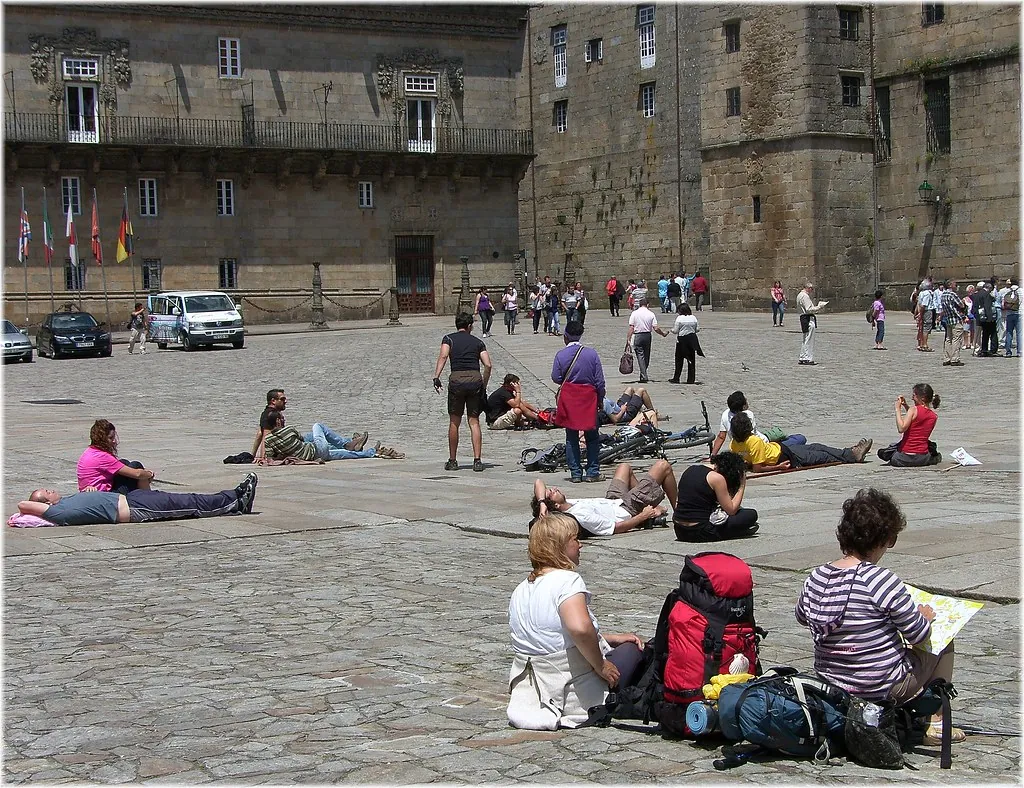
The arrival of pilgrims created a network that extended far beyond a single path. They set out from different places, shared stretches of the journey and converged on Santiago. That diversity still defines the Camino today, as the map of routes, stages and albergues shows.
Today's itineraries include the French Way, covering 772 km in 33 stages, and the Primitive Way, covering 309 km in 14 stages. Their differences show how distinct regions and approaches are united by a common destination.
When did the Camino reach its Golden Age?
Its great heyday came between the eleventh and thirteenth centuries. Pilgrims from across Europe travelled along routes from Paris, Vézelay, Le Puy and Arlés, which converged in the Pyrenees before continuing towards Galicia.
The growing number of pilgrims transformed the lands they passed through. Hospitals, monasteries, bridges and churches were built along the routes to provide shelter, care and places of worship. The Camino became an infrastructure for travel and hospitality as well as a religious practice.
The Codex Calixtinus, dating from the twelfth century, comes from this period. It described stages, towns and even the character attributed to the people of each region. Its combination of directions and advice has led it to be regarded as an early travel guide.
When was Santiago Cathedral built?
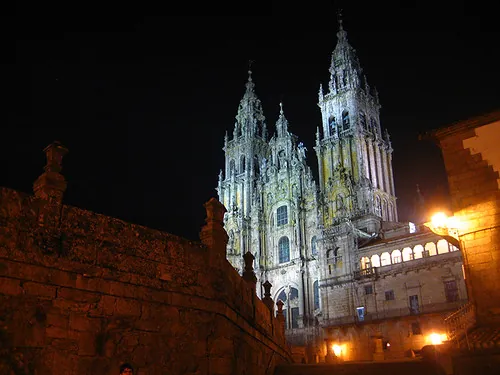
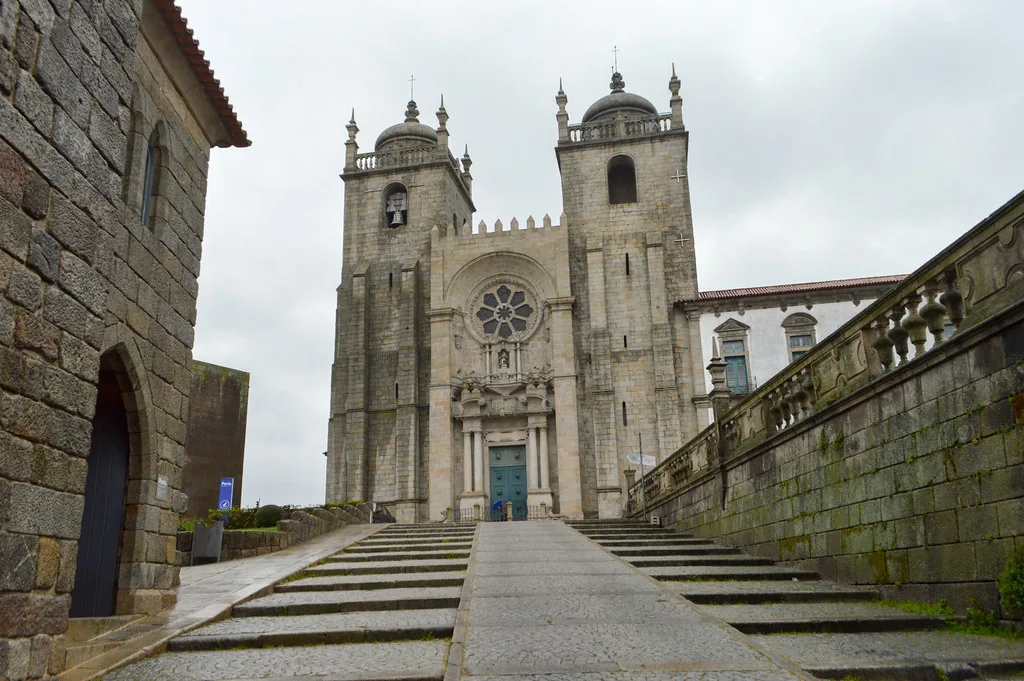
Construction of the present cathedral began in 1075 under Bishop Diego Peláez, at a time when the pilgrimage was experiencing its greatest growth. The church was consecrated in 1211, more than a century after work began.
The Portico of Glory, created by Master Mateo, is one of the masterpieces of European Romanesque art. The cathedral embodies much of the historical and ritual meaning of arriving in Santiago; the botafumeiro at Santiago Cathedral is also part of this heritage.
Why did the Camino fall into decline?
From the sixteenth century onwards, wars, the Protestant Reformation and epidemics reduced the flow of pilgrims. Political, religious and public-health conditions had changed, and the great medieval network gradually lost momentum.
The Camino did not disappear, but it faded into relative obscurity for centuries. Pilgrimage continued without the Europe-wide reach of its Golden Age and played a smaller role in the regions it crossed.
How was the Camino revived in the twentieth century?
In 1987, the Council of Europe recognised the Santiago pilgrimage routes as its first Cultural Route. UNESCO inscribed the French Way in Spain in 1993 and extended that property in 2015 to include the Northern Routes; it did not designate every modern route on one date.
The resurgence also brought routes with their own distinct character back into view. The Northern Way covers 822 km in 36 stages, while the Portuguese Way spans 619 km in 25 stages. This variety is a reminder that the Camino is a network of pilgrimage routes.
What traces of the medieval Camino remain today?
The clearest is the very rhythm of the journey: moving forward in stages, finding shelter and meeting other walkers. Medieval hospitals and monasteries find an echo in today's network of accommodation, even though conditions have changed.
The rituals that shape the experience also endure. The pilgrim credential records your passage through different places. On reaching Santiago, the Compostela preserves the link between the physical journey and the pilgrimage's historical meaning.
To read this history on the ground, consider what each building did: a hospital welcomed travellers, a bridge helped them cross a river, and a church brought together worship and local life. Not every surviving monument is medieval, nor does every tradition prove an event. Accounts give different discovery dates; the Cathedral places it between 820 and 830, without making Pelayo’s story archaeological proof. You can explore this heritage without walking for weeks: plan shorter stages and leave time to visit open sites, read their information and talk to those looking after them.
Frequently asked questions
When did the Camino de Santiago begin?
The discovery is placed in the early ninth century; accounts do not agree on one exact date. Tradition tells of Pelayo seeing lights and informing Bishop Teodomiro, who identified the tomb as that of the Apostle.
Who discovered the tomb of the Apostle St James?
According to tradition, the hermit Pelayo saw lights and alerted Bishop Teodomiro. The bishop investigated the site and identified the tomb as that of the Apostle St James the Greater.
When was the Camino at its height?
Its Golden Age lasted from the eleventh to the thirteenth century. During this period, pilgrim numbers rose and networks of hospitals, monasteries, bridges and churches expanded.
Why is the Codex Calixtinus important?
This twelfth-century manuscript described stages, towns and practical aspects of the journey. Its combination of directions and narrative means it is often considered one of the earliest travel guides.
Has the Camino de Santiago always been a religious route?
It began as a Christian pilgrimage to the tomb believed to be that of the Apostle St James. It retains those roots today while also embracing cultural and personal motivations, allowing people to experience it in different ways.
Knowing its history changes the way you see every church, bridge and place of shelter. To turn that past into a journey of your own, compare routes, distances and stages in the list of Camino routes.
Cover photo: ReservasdeCoches.com · CC BY 2.0 · WebP.