











Litoral, Coastal and Central: Portuguese Camino connections
In brief
Understand the three route names and prepare a switch at Vila do Conde–Rates or Caminha–Valença without inventing a connection.
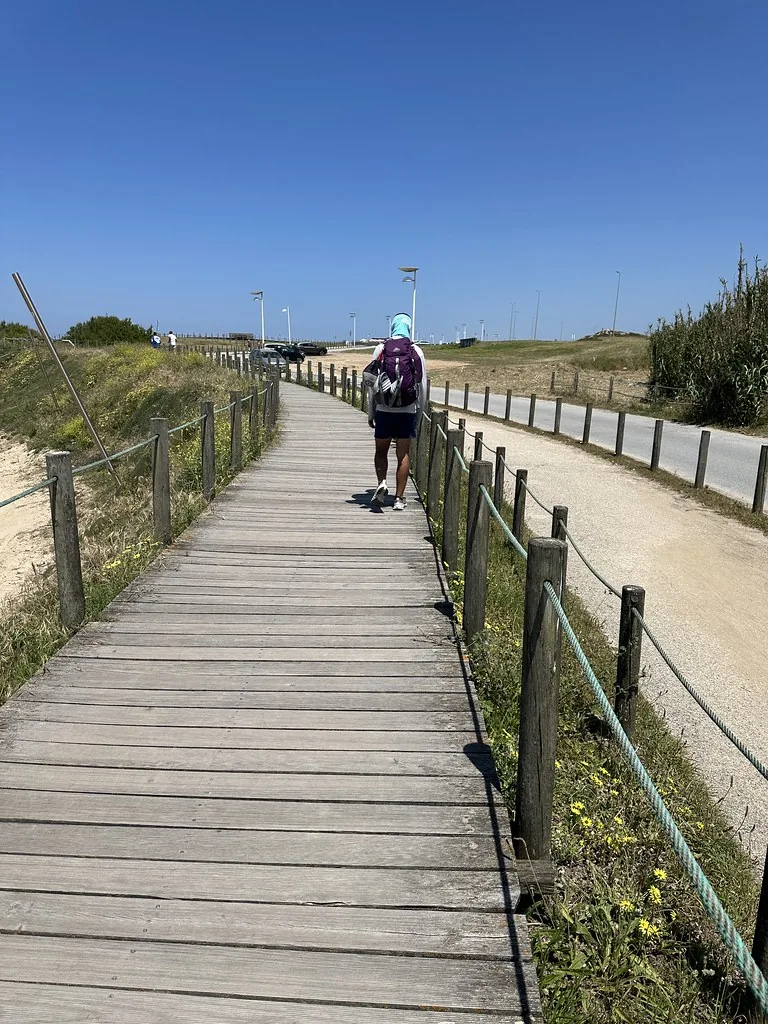
Litoral, Coastal and Central are not three parallel lanes you can switch between at any corner. The Coastal route combines sea views and inland sections; Litoral often means alternatives closer to the water. You can prepare connections to the Central at Vila do Conde–Rates or Caminha–Valença, with their own track and accommodation. Decide using a map and enough time, rather than following an arrow whose destination you have not checked.
A mental map to avoid confusion
Think of the Central as the inland corridor from Porto through Rates, Barcelos, Ponte de Lima and Valença, then across to Tui. The Coastal corridor heads through the Vila do Conde, Esposende, Viana do Castelo and Caminha areas. Continuing along Galicia's coast requires crossing the Minho towards A Guarda, then walking through Oia, Baiona and Vigo to the junction at Redondela.
Litoral often describes shoreline options, promenades and boardwalks. Do not infer a single official designation, continuous waymarking or identical accessibility throughout. Maps and apps use different names. Some Portuguese publications also include the land branch to Valença within the Coastal route: the name alone does not identify your intended Minho crossing.
For a general choice based on atmosphere, time or preference, read Central or Coastal: which to choose. Here the question is how to connect tracks without inventing a link or assuming bookings still fit after a switch. The Portuguese route and Coastal route pages locate the corridors.
Porto–Matosinhos: your first real choice
A riverside departure may descend to the Douro, reach its mouth and continue along the shore towards Matosinhos. That is a Litoral departure, not every waymarked route north. Porto's municipal map distinguishes tracks; check your actual start and your app's line rather than treating similar names as equivalent.
Before continuing towards Leça da Palmeira, identify your pedestrian crossing around Leixões harbour and confirm current access. Do not enter port facilities or follow a straight line merely because the sea is nearby. If access is closed, return to safety and check the locally indicated alternative. An offline map does not override barriers or restrictions.
Starting on foot in Matosinhos simplifies the urban section but changes your starting point. To walk from Porto, allow for your precise exit and add the distance from your accommodation. Arrival from the airport is separate logistics. A flight, uncertain transfer and long stage are not one predictable morning.

Vila do Conde–Rates: joining the Central
At Vila do Conde you can leave the coastal continuation and prepare a route to São Pedro de Rates on the Central corridor. Vila do Conde's official tourist map shows both axes and Rates. This confirms their geographical relationship; it does not replace a detailed track from your accommodation or checking that day's junctions.
Ask tourist information or a local Camino source which inland departure is currently indicated. Carry a map with intermediate towns and compare direction before each fork. Following only “Santiago” is insufficient: different paths can reach Santiago. No unchecked street-by-street instructions or universally waymarked connection are claimed here.
The practical choice is to sleep in Rates or continue along the Central, based on measured distance, daylight and confirmed accommodation. Do not add a morning coastal walk to an afternoon inland connection without measuring both. Passing Vila do Conde does not oblige you to switch there; sleeping before the change may be wiser than exploring tired.
After switching, rebuild stages towards Barcelos and Ponte de Lima. Esposende or Viana do Castelo bookings are no longer ahead. Confirm cancellations, new beds and contracted luggage transfer; a Coastal operator need not accept an inland collection or delivery without notice. Tell anyone meeting you about the change.
Caminha: A Guarda or a connection to Valença
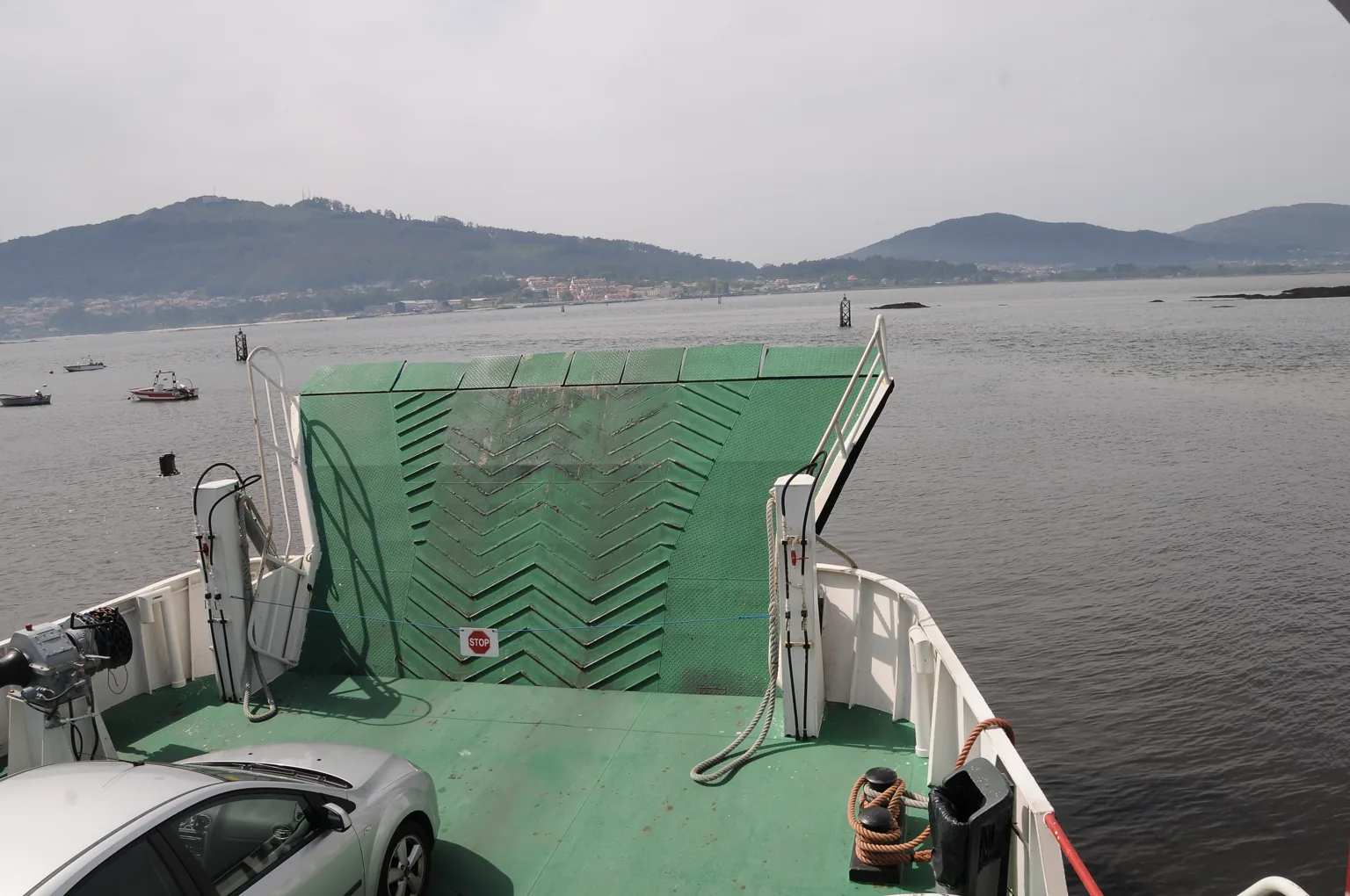
This choice is more than scenery. Continuing along Galicia's coast requires a suitable Minho crossing towards A Guarda. Confirm available crossings and their conditions directly with the operator for your travel date. Ask boarding point, landing point, luggage allowance and booking procedure.
A historical reference to a ferry is no promise of current service. This guide gives no fixed timetable, price or guaranteed operator. Weather, river conditions and service changes may affect departure. Clarify whether the time is Portuguese or Spanish local time. Leave room to wait and decide without forcing an excessive stage after landing.
The other option continues overland along the corridor through Vila Nova de Cerveira to Valença, shown on official Portuguese maps. It is its own route, not an instant substitute for reaching Oia without a boat. In Valença you can join the Central and cross the old international bridge to Tui, following current pedestrian access and directions.
Consider Caminha–Vila Nova de Cerveira and Vila Nova de Cerveira–Valença as two possible blocks to check, not two settled bookings. If combining them, measure the complete track and accommodation access; a river promenade distance does not represent the whole connection. Split when pace, daylight or conditions suggest it.
From Valença and Tui, the Central continues towards O Porriño and Redondela. You then do not walk A Guarda–Oia–Baiona–Vigo within the same northbound journey. The Tui and Valença guide helps with this new section. Compare remaining days: avoiding a crossing alone does not prove the trip is shorter.
The Redondela junction needs no invented connection
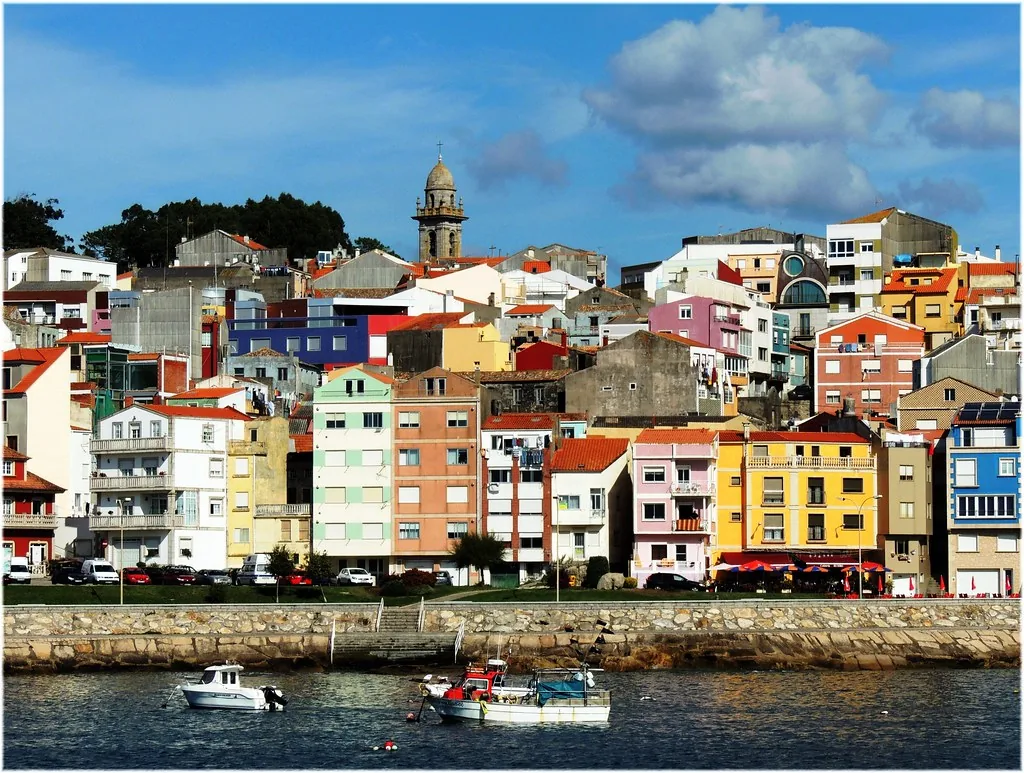
Following the Coastal route through A Guarda, Oia, Baiona and Vigo brings you to the inland Portuguese junction at Redondela, documented by the Xunta. You need no Vigo–Tui shortcut to reach the shared section. Two towns looking close on a general map is no basis for recommending an unchecked link.
From Redondela the shared corridor continues through Pontevedra, Caldas de Reis and Padrón to Santiago. The Spiritual Variant is another choice with its own days. The boat guide from Vilanova de Arousa to Padrón covers that logistics, not the Minho border crossing. They involve different places, operators and decisions.
A different route means different services
Review accommodation at new stops and confirm opening and rules. A drawn connection certifies neither beds nor restaurants nor luggage collection. Summer tourist services can differ off season. Carry food and water for the checked interval, especially before leaving a town where you can restock.
Identify which bookings to cancel and keep. Note latest check-in, contacts and distance from the trail at new properties. Do not assume a signal at the next junction will let you resolve everything. Save maps and confirmations offline and keep a simple return plan to the last safe point.
With companions, decide whether everyone switches or you meet later. Agree a specific meeting place and a way to report delay. Find compatible routes and pace in Companions, but do not expect anyone to know your changed itinerary from an old conversation. If tiredness triggers the decision, reduce the day's load before adding exploration.
A check before every switch
- Destination: identify the junction and the corridor afterwards.
- Track: check walkable access and closures; a driving route is not a pedestrian alternative.
- Time: count distance from your door, daylight, waiting and breaks.
- Services: confirm beds, food, water and luggage on your chosen variant.
- Communication: notify affected properties and agree a group meeting.
If an important element cannot be verified, stay on the known corridor or postpone the switch. The planner helps reorganise days, and the twelve-day plan from Porto provides a coastal reference. Replanning does not require keeping that number of days.
Check Compostela requirements separately. A variant choice does not replace Pilgrim Office documentation requirements. These maps guide decisions; they do not certify every seaside walk as official or settle a section skipped by transport.
Frequently asked questions
Are Litoral and Coastal exactly the same?
Not always. Litoral usually means shoreline alternatives; Coastal includes inland sections. Check the line, since sources use different names.
Can I join the Central at Vila do Conde?
You can prepare a connection to Rates. Check local departure, track, distance and accommodation, then rebuild later days.
Does Caminha–Valença replace the A Guarda boat?
It is an overland option to continue on the Central through Tui, not an equivalent arrival in Oia. Stages and bookings change.
Where do Coastal and Central meet in Galicia?
In Redondela when arriving through A Guarda, Oia, Baiona and Vigo. A shared corridor continues towards Santiago.
Is the Minho boat the Traslatio?
No. Traslatio belongs to the Spiritual Variant between Vilanova de Arousa and the Padrón area, with separate logistics.
Cover photo: John Hayes (gravelboy) · CC BY-SA 2.0 · WebP.