









Pilgrim stories · French Way

Three days to cross the Pyrenees, alone and unafraid

Translated from Français · See original

Story by the team

Saint-Jean-Pied-de-Port, Roncesvalles, Zubiri, Pamplona: the first three days of the Camino francés, told by a thirty-four-year-old woman from Lyon setting off alone for the first time, with a fear she left behind at the Lepoeder pass.

Camille Roux May 2024 · 3 days · 66 km

Day 1 · 6 May

Saint-Jean-Pied-de-Port – Roncesvalles: the climb everyone talks about

At the Lepoeder pass, a Korean woman handed me an orange without a word. I never knew her name, and I never saw her again. That was where I understood what “Camino” meant.

I slept for three hours. The day before, at the pilgrims’ welcome office on rue de la Citadelle, a woman volunteering there had looked at me for a long time before handing me my pilgrim passport, as though weighing up whether I would make it. I did not know myself. At thirty-four, it was the first time I had gone anywhere alone, and I had chosen to begin with twenty-four kilometres of mountains.

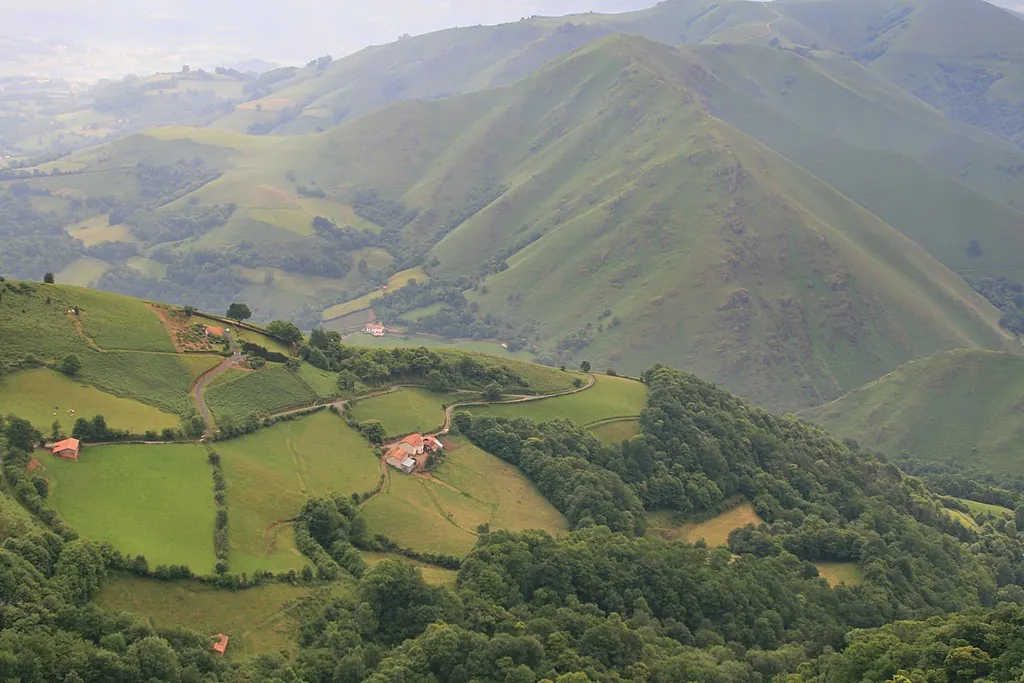
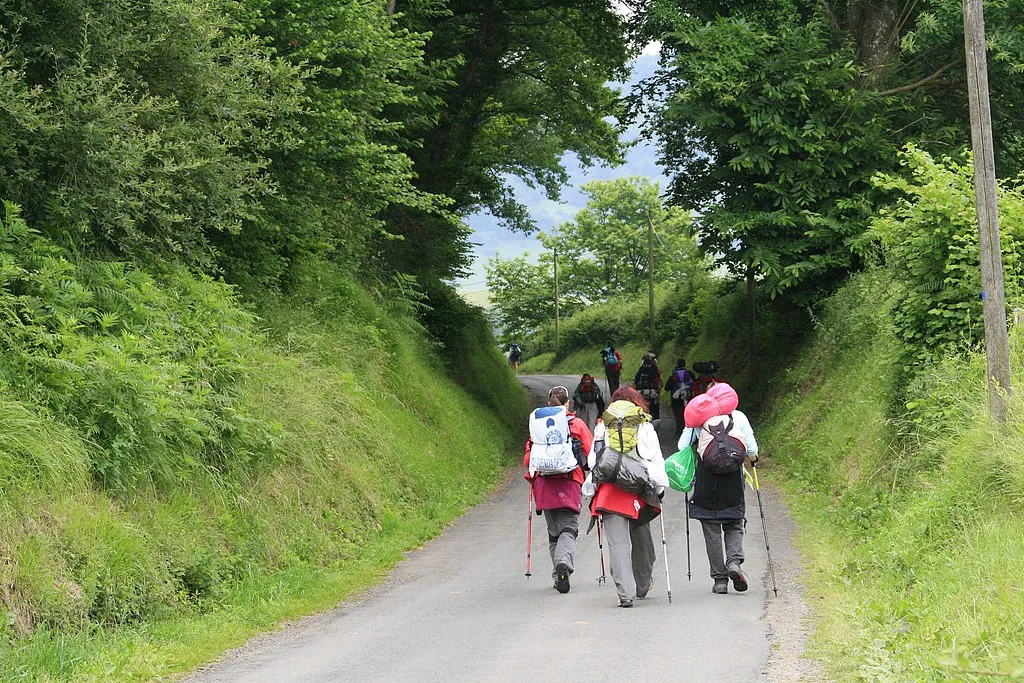
I set off at 6:40 am, wearing a head torch, with thick fog all the way to Honto. The Napoleon route climbs relentlessly, but it is never dangerous if you leave early, take water and leave your pride behind. At the Orisson refuge, eight kilometres in, I drank the best coffee with milk of the entire Camino while watching two German women laugh at their own soaking socks. We met again in Zubiri the next day; we stayed together all the way to Pamplona.

Thibault’s cross and the vultures

After Roland’s fountain, you enter Spain without realising it, and the vultures glide so low you can hear their wings. At the Lepoeder pass, at 1,430 metres, a Korean woman in her sixties handed me an orange without a word, smiled and walked on. I never knew her name and never saw her again. I cried as I peeled that orange, without knowing why. Now I know: it was the fear leaving me.

Roncesvalles suddenly appears among the beech trees, huge and grey. A serious piece of advice: in May, book the collegiate church hostel the day before; it was full by four in the afternoon.

Distance
24.2 km
Mood
Radiant
Slept at:
Auberge collégiale de Roncevaux

Day 2 · 7 May

Roncesvalles – Zubiri: the forest and the descent

The “Santiago de Compostela 790 km” sign on the way out of Roncesvalles. Everyone takes a photo there. So did I, trying not to work out how many days that would mean.

Waking at six in a hundred-bed dormitory, to the Gregorian chant the hostel volunteer plays over the speakers to wake everyone gently. It is not gentle at all, but you never forget it. Breakfast in Burguete, in the bar Hemingway used to visit when he came fishing, with hot chocolate so thick you could stand a spoon in it.

The day takes you through Navarre’s beech woods, with stops in Espinal and Viscarret. It is a gentle stage, almost tender, where your body starts to understand what is expected of it. I walked for two hours with a retired Belgian man doing the Camino for the fourth time, who told me the secret was never to look beyond the next village. I followed that advice all the way to Santiago, two years later.

The Alto de Erro

The descent to Zubiri over the Alto de Erro is steep, stony and slippery after the night’s rain: walking poles are a must, knees bent, pride put away. I saw a young American man fall twice while trying to run downhill. In Zubiri, the Rabia bridge, which legend says cures rabid animals that cross it three times, seemed to me the most beautiful place in the world.

That evening, a beer with the two German women from Orisson, Katrin and Ute. All three of us spoke dreadful English, and we laughed until the hostel volunteer switched off the lights.

Distance
21.4 km
Mood
Good
Slept at:
Auberge municipale de Zubiri

Day 3 · 8 May

Zubiri – Pamplona: the first city

To enter Pamplona over the Magdalena bridge and through the city walls is to enter a city that has been waiting for you for a thousand years.

An easy stage along the Arga, through Larrasoaña, Zuriain and Trinidad de Arre. Your body starts getting used to it, and so do the blisters: I had two, securely taped, and could no longer feel them. This is the day you stop being a tourist with a backpack and become a pilgrim, without knowing exactly when it happened.

In Arre, an elderly gentleman sitting outside the church asked me where I came from. “Lyon.” He thought for a moment and told me his daughter had married a man from Lyon, and it had not ended well. We laughed. He offered me a glass of water and showed me the shortcut through the Magdalena park.

Pamplona

Entering the city over the medieval bridge, climbing towards the France Gate and passing through the walls is something you feel in your body: you sense the weight of everyone who has passed that way. Pamplona deserves a whole afternoon. The cathedral, the Plaza del Castillo, the pintxos on calle Estafeta, where the bulls would run ten days later. I took a room in a guesthouse, alone, with a window overlooking the rooftops, and slept for twelve hours straight.

Three days. Almost nothing on an eight-hundred-kilometre Camino. But those are the three days that taught me I could set off alone, and that the loneliness I feared does not exist on this path.

Distance
20.4 km
Mood
Radiant
Slept at:
Pension dans le vieux Pampelune