









In Grado, a man with a walking stick explained in five minutes what three guidebooks had left out, and made us pay for the coffee.
On the second day, in Grado, a man sitting outside the bar in the square saw us photographing a mojón, the stone marker with the yellow shell and engraved number, and asked us in Asturian whether we knew why the shell was read the opposite way in Galicia to Asturias. We did not. We did not even know it could be read.
He explained it like this, drawing on the ground with his walking stick. The Santiago shell has a point from which the rays spread out. In Galicia, by the Xunta’s convention, the rays point towards Santiago: you follow the direction in which the shell “opens”. In Asturias, Castile and almost all the rest of Europe, it is the other way round: the narrow part, where the rays meet, points the way. The result is confused pilgrims at regional borders, endless debates in hostels and quite a few bar stories like this one.
The number that is not what it seems
And the number on the marker? It is not the kilometres you have walked, but those remaining to Santiago, calculated along the official variant rather than the route you have taken. That is why they sometimes “increase” after a fork: you are not going backwards, you have just changed variants. The man said that every year some pilgrim comes back to the bar in despair to ask whether they have taken the wrong road. He offers a coffee and explains. He made us pay for ours, and he was right to.
The Primitivo, the first
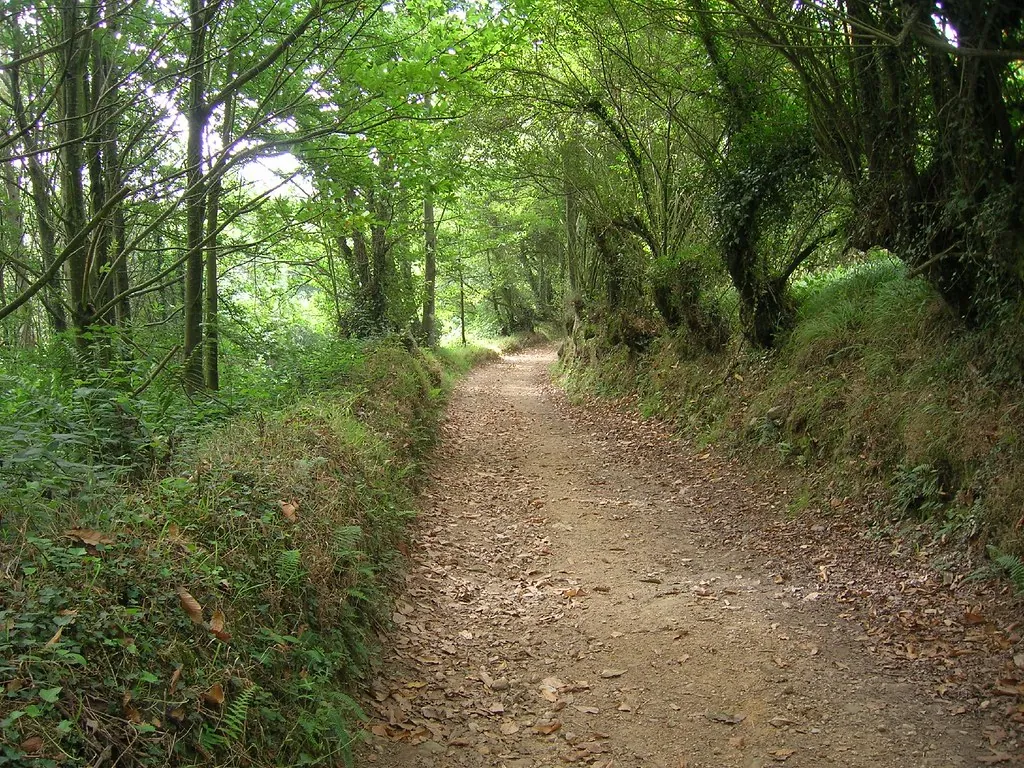
He also told us why the Camino Primitivo is called that: because it was the first. Around the year 813, when the apostle’s tomb was “rediscovered” in a Galician woodland, King Alfonso II of Asturias set out from Oviedo with his court to see it. That route, through mountains and woods, is the Primitivo. All the other Caminos, including the Francés, came later, when the kingdom shifted and the pilgrims moved with it.
From then on, we looked twice at every marker we came across: once for direction, and once out of respect. And each time it felt as though we were walking a little further into history, which is, after all, why you walk a Camino instead of taking a train.