The stage, step by step
From O Pedrouzo to the first climb
Leave O Pedrouzo with water and some food: Café-Bar Pedrouzo, the Arca supermarket and Farmacia Ordóñez are all available there. The route descends 38 m between km 1.8 and km 2.8, then begins the main climb, gaining 117 m by km 5.
Amenal and the meadows
During the climb and beyond it, you can stop at Hotel Restaurante Amenal or Che. Between km 5 and km 6.5, the route descends another 37 m and continues through meadows and small woods before approaching the Santiago area.
Towards Monte do Gozo
Between km 8.8 and km 11.8, there is another climb of 87 m, with an average gradient of 2.9%. Fonte dos Pelamios is roughly in this section, while Bar Cámping San Marcos appears further on, before reaching Monte do Gozo.
The descent to Santiago
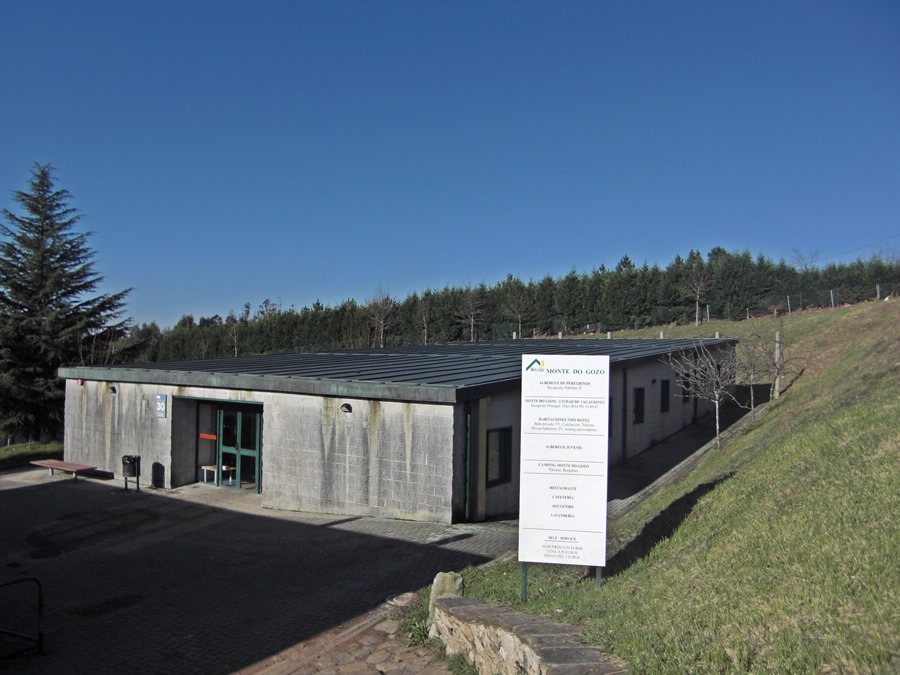
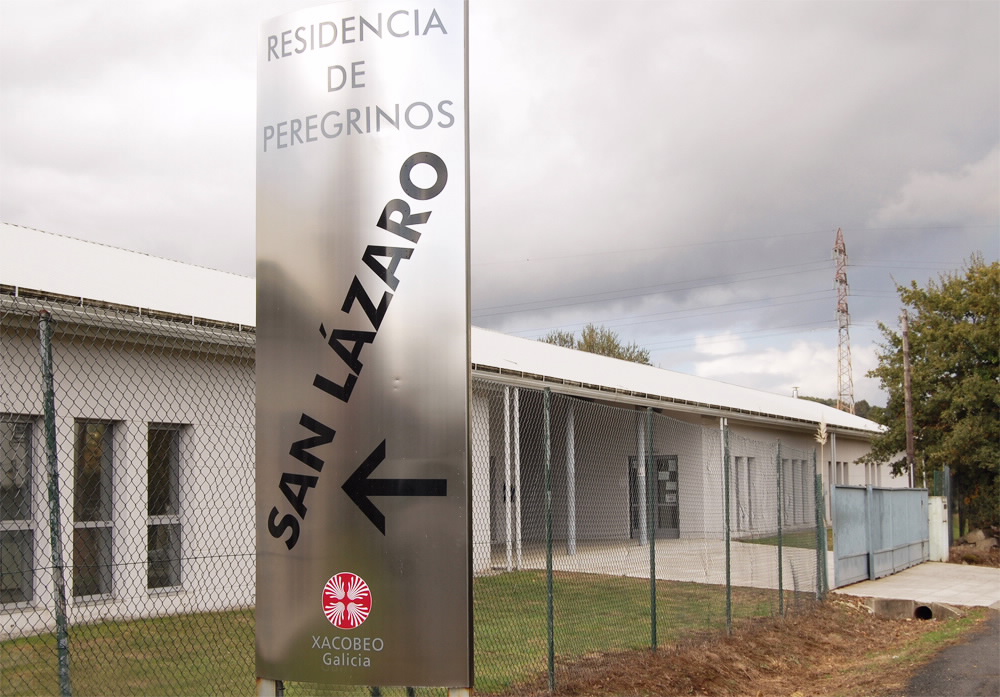
Around Monte do Gozo, the route begins its long descent, losing 112 m between km 11.8 and km 15.8. If you need a break, Albergue do Monte do Gozo is on this approach to Santiago. You will then pass Fonte do Parque de Carlomagno, Fonte de Tabaniscas and the hostels in San Lázaro.
The urban approach and the Cathedral
The final kilometres are urban and require extra attention to traffic and waymarking. Once in Santiago, you can sort out shopping and pharmacy needs before continuing to the Cathedral, where this stage and the Camino end.
What to see on stage 14
Monte do Gozo
Monte do Gozo is the emotional high point of the approach to Santiago: the city comes into view and the final destination becomes real. It also marks the transition from meadows to the urban approach.
Catedral de Santiago de Compostela
Construction of Catedral de Santiago de Compostela began in 1075, and it retains a Romanesque structure with later additions. It is the final destination of the route and, according to tradition, houses the remains of the Apostle St James.
Pórtico de la Gloria
Pórtico de la Gloria was created by Maestro Mateo between 1168 and 1188. Its sculptures form one of the great works of European Romanesque art and give special meaning to the final steps of the Camino.
Santiago de Compostela
The city combines a medieval old quarter with the Baroque architecture of Compostela from the 17th and 18th centuries. After arriving, it is worth walking around without your rucksack and taking in the change from rural paths.
Where to sleep in Santiago de Compostela
If you decide not to continue into the centre, O Pedrouzo has Albergue Xunta de Arca do Pino, Albergue de Peregrinos de Arca, Albergue O Burgo, Albergue Otero and Albergue Porta de Santiago. At the entrance to Santiago, you will find Albergue do Monte do Gozo, Albergue de Peregrinos de San Lázaro and Albergue de Peregrinos Residencia San Lázaro. In the city itself, there are also donation-based options such as Albergue para Peregrinos e Xente sen Recursos Xoán XXIII and Hospedería San Martín Pinario. Booking ahead is advisable on this stage, as many groups arrive at the same time.
Where to eat and refuel
O Pedrouzo has plenty of places for breakfast and provisions, including Restaurante O Acivro, Parrillada Pulpería Stop, Café-Bar Pedrouzo and the Dia and Onda supermarkets. Along the way, you can stop at Hotel Restaurante Amenal, Mesón Cima das Quintas or Casa de Comidas Porta de Santiago; there is also Bar Cámping San Marcos. As you enter Santiago, the choice becomes plentiful again, with Compostela Dreams Café, Café Bar 73, In Antrum and numerous shops such as Gadis, Carrefour and Alcampo.
Practical tips for this stage
Set off early
Monte do Gozo and the approach to Santiago become crowded with pilgrims, especially in summer. An early start makes for a less congested walk and increases your chances of reaching the Cathedral with time to spare.
Prepare for the initial climb
Between km 2.8 and km 5, the route climbs 117 m at an average gradient of 5.2%. Do not treat it as a short stroll: have breakfast before leaving and save energy for the second half of the day.
Carry water to the middle section
You can fill your bottle in O Pedrouzo and use Fonte dos Pelamios as a reference point. Later, Fonte do Parque de Carlomagno and Fonte de Tabaniscas appear near Santiago.
Take care on the urban approach
The route changes from paths to city streets and can be more confusing because of traffic and junctions. Follow the arrows carefully and check the Cathedral's opening times if you want to visit Pórtico de la Gloria on the same day.
Decide how you want to experience the arrival
Monte do Gozo is a good place to slow down and enjoy the moment. If the crowds of pilgrims become overwhelming, you can pause there, or dodge the worst of it by leaving O Pedrouzo very early.
Frequently asked questions about stage 14
How long does it take to walk from O Pedrouzo to Santiago?
The stage is 19.4 km long and takes an average of 4.9 hours. The total ascent is 229 m and the descent is 249 m, although the urban approach can make the final section feel slower.
Where do you first see Santiago?
The first panoramic view of the city appears at Monte do Gozo. From there, you still have the descent and the urban approach before reaching the Cathedral.
Is the initial climb difficult?
It is the most demanding section of the profile: between km 2.8 and km 5, you climb 117 m at an average gradient of 5.2%. It is best to set off after breakfast and walk at a steady pace.
Where can I stop if I do not reach Santiago?
O Pedrouzo is the most complete option before setting off, and Albergue do Monte do Gozo is available on the approach. Closer to the centre, you have Albergue de Peregrinos de San Lázaro and Albergue de Peregrinos Residencia San Lázaro.