The stage, step by step
Leaving Sobrado
Leave Sobrado dos Monxes with the day well organised. The route climbs between km 1 and 3.3, followed by an 86 m descent between km 4.5 and 7.
Corredoiras and Boimorto
Corredoiras is a useful stopping point around km 8, with the cafés Carreira and Rico. Further on, Boimorto offers Vilanova, Aliprox, Supermercado Toñito and Farmacia Boimorto.
The central descent
Between km 10.8 and 14.5, the route loses 108 m, making this the longest descent of the stage. Casa Moncho and A Taberna appear on this section, so you can plan a break here before tackling the final kilometres.
Entering Arzúa
The route continues with another descent between km 15 and 19 and a final climb between km 19 and 20.3. Arzúa has plenty of accommodation, supermarkets and restaurants, including Casa Nené, Restaurante Casa Teodora and Pulpería Parrillada Europa.
What to see on stage 34
Sobrado dos Monxes
The stage starts beside the Monasterio de Sobrado dos Monxes, an important Cistercian landmark on the Camino del Norte. If you have slept there, it is worth setting off early enough to see it before tackling the first kilometres.
Corredoiras
Corredoiras is one of the intermediate stops on the day and lies in a useful area for a rest. Carreira and Rico provide a definite place to break up the section between Sobrado and Boimorto.
Boimorto
Boimorto divides the stage and provides practical services for pilgrims, including a supermarket, pharmacy, cafés and accommodation. It is the right place to check that you have everything you need before continuing towards Arzúa.
Arzúa
Arzúa marks the junction with the Camino Francés and the Camino da Prata. The atmosphere changes on arrival, with a much wider choice for sleeping, eating and preparing for the next day.
Where to sleep in Arzúa
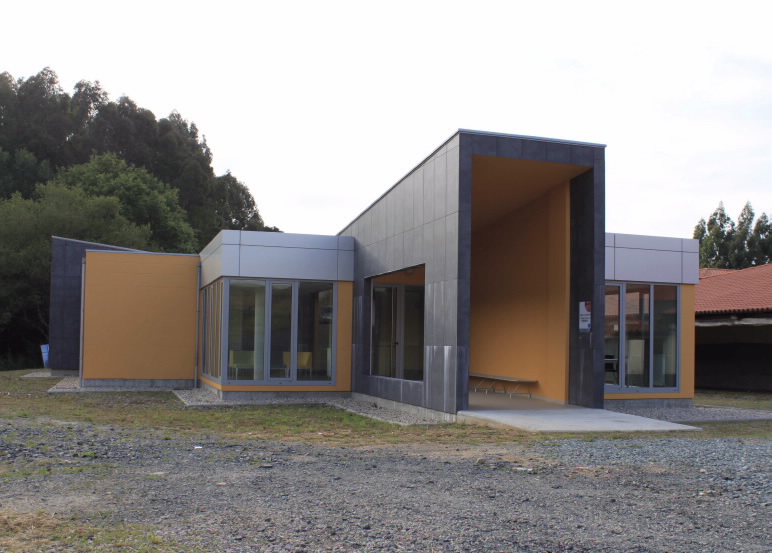
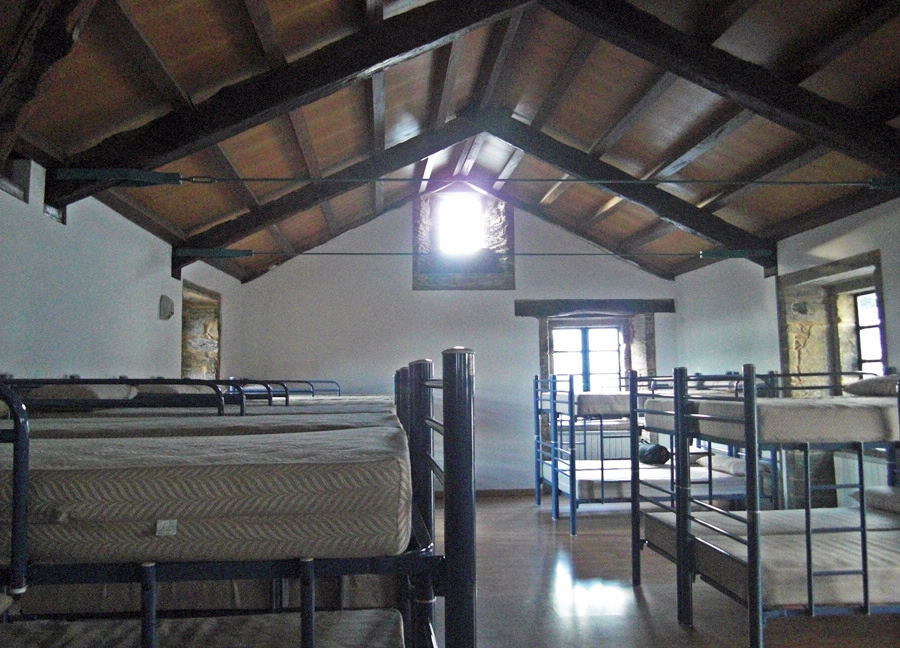
In Sobrado dos Monxes, you set off from the Albergue de Peregrinos de Sobrado or Albergue Lecer. If you want to split the stage, Boimorto is the only intermediate point with beds: there you will find Albergue Boimorto, Albergue-hostel Casa da Gándara and Albergue de Peregrinos Telleira de Baiuca, but places are limited and it is worth calling before setting off. Arzúa, now on the Francés, is a different story: between the Albergue Municipal de Arzúa and private options such as Albergue A Conda, Albergue O Santo and Albergue Casa do Peregrino, you are unlikely to be left without a bed, although the town fills up with pilgrims coming from Sarria in summer.
Where to eat and refuel
Have breakfast in Sobrado before setting off: Casa Cucina and Café Real are beside the route. Corredoiras, about a third of the way through the stage, is the first proper stopping point, with Carreira and Rico. In Boimorto, you can eat at Vilanova or Casa Moncho and shop at Aliprox. After that, there is only A Taberna before the final stretch, so if you set off late, take something in your rucksack. In Arzúa, food is no longer a problem: try octopus at Pulpería Parrillada Europa, sit down at Casa Nené or Restaurante Casa Teodora, and find supermarkets on every street.
Practical tips for this stage
Carry water for the central section
Fonte Palomo is at the start in Sobrado and Fonte da Quenlla appears in Arzúa. For the section between Boimorto and the finish, set off with a full bottle and do not base your plans on finding a fountain exactly when you need one.
Take care on the descents
The stage loses 264 m overall. The 108 m descent between km 10.8 and 14.5 and the 86 m descent between km 4.5 and 7 require control rather than speed.
Make the most of Boimorto
Boimorto is the best intermediate point for buying food, having a drink or dealing with an urgent need: Vilanova, Aliprox, Supermercado Toñito and Farmacia Boimorto are all there.
Expect more pilgrims
Arzúa connects with the Camino Francés and the Camino da Prata. From the finish onwards, it is reasonable to expect more activity, so secure accommodation if you are walking during a busy period.
Try Arzúa cheese
Arzúa cheese is the most characteristic local product associated with the finish. You can leave buying or tasting it until you have completed the stage.
Frequently asked questions about stage 34
How long does it take to walk from Sobrado dos Monxes to Arzúa?
It is 22 km, with an average walking time of 4.9 hours. The route is undulating, with 120 m of ascent and 264 m of descent.
Is there much climbing on this stage?
The clearest climb is at the start, between km 1 and 3.3, with 60 m of elevation gain. The profile is more downhill overall: the main descent between km 10.8 and 14.5 loses 108 m.
Where can I stop halfway?
Corredoiras is around km 8 and has Carreira and Rico. Boimorto offers more services, including Vilanova, Supermercado Toñito, Farmacia Boimorto and Albergue de Peregrinos Telleira de Baiuca.
Why is Arzúa an important finish?
Arzúa is where the Camino del Norte meets the Camino Francés and the Camino da Prata. It also has plenty of accommodation, restaurants, supermarkets and cafés.