The stage, step by step
Leaving O Pedrouzo
O Pedrouzo is the last convenient place to have breakfast, buy water and deal with any minor problem. The route descends at first and soon begins the main climb. Walk calmly: being close to Santiago makes you want to speed up just when it is least advisable.
Arca, O Pino and the woodland section
After Arca, O Pino, the route continues among trees and with moderate changes in gradient. It still feels rural, but there are already more pilgrims around. Places to eat are specific rather than continuous, so organise your timing before setting off.
The climb towards Monte do Gozo
The second notable climb is a sustained section before Monte do Gozo. Fonte dos Pelamios is in this part of the route. Afterwards, the path begins to descend and the atmosphere changes: you are now on the final approach to Santiago.
Monte do Gozo and the urban approach
At Monte do Gozo comes one of the Camino’s most recognisable moments: the first view of the cathedral. Afterwards, there is a long descent and the entrance into Santiago de Compostela, with traffic, crossings and plenty of people. Follow the signs and stay alert during the final metres.
What to see on stage 33
Monte do Gozo
This is the hill from which pilgrims traditionally saw the cathedral towers for the first time. Do not expect a postcard panorama: trees and buildings have grown up, and you need to find the right gap to make them out. Even so, stop here: there are five kilometres of tarmac left, and this is the last quiet place before entering the city.
Catedral de Santiago de Compostela
The cathedral, with its Romanesque origins and Baroque elements, is the final destination of the Camino Francés and the burial place of the apostle James. Reaching it feels different after so many days of walking.
The airport section
It is worth knowing this before setting off: the final morning is not the prettiest part of the Camino. After the initial woodland, you follow the fence around Santiago airport for quite some time, with planes taking off overhead, then continue through an industrial estate, roundabouts and pavements. It is unattractive and feels long, but it is what brings you into the city.
Where to sleep in Santiago de Compostela
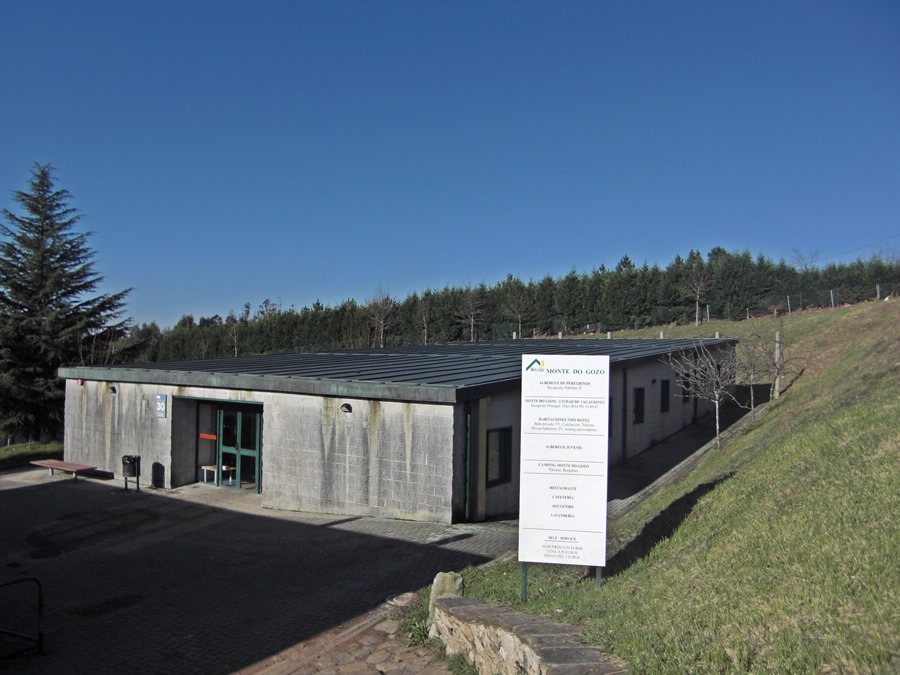
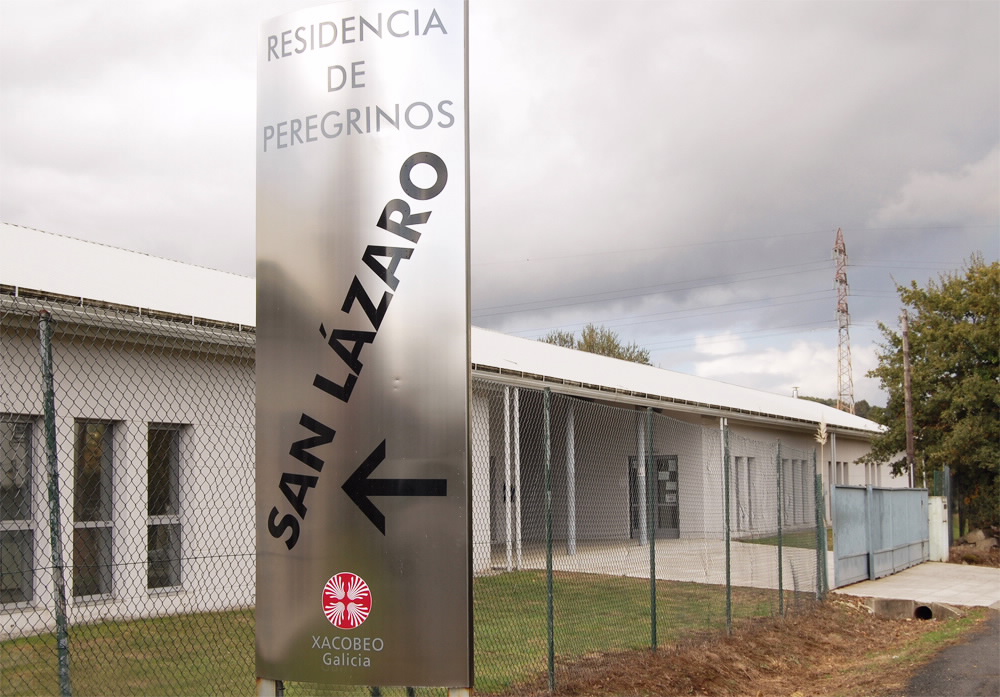
If you prefer to sleep in O Pedrouzo before the arrival, Albergue Otero is a practical option. Halfway through the final section, there is Albergue do Monte do Gozo. In Santiago de Compostela, you can choose Albergue de Peregrinos de San Lázaro, Albergue de Peregrinos Residencia San Lázaro or Hospedería San Martín Pinario. Albergue para Peregrinos e Xente sen Recursos Xoán XXIII is another donation-based option in the city. Book if you are arriving on busy dates.
Where to eat and refuel
It is best to leave O Pedrouzo after breakfast, for example at Restaurante Cantina Galega. Along the route, you will find Hotel Restaurante Amenal, Mesón Cima das Quintas and Casa de Comidas Porta de Santiago. As you approach Santiago, there are more options, including Compostela Dreams Café, but do not expect places to eat continuously throughout the route.
Practical tips for this stage
Set off with water and some food
O Pedrouzo is the last convenient place to prepare for the day. Afterwards, you can plan to replenish your water at Fonte dos Pelamios, Fonte do Parque de Carlomagno and Fonte de Tabaniscas.
Save your strength for the first climb
The climb between km 2.8 and 5 gains 117 m, with an average gradient of 5.2%. Start slowly, even if you feel like racing towards Santiago.
Take the urban approach seriously
From Monte do Gozo, the route enters an area with traffic and plenty of activity. Follow the signs, take care at crossings and do not walk distracted by emotion.
Allow time for the arrival
The average walking time is 4.3 hours, but there is no need to turn the final day into a race. Stop at Monte do Gozo and reach the cathedral with time to enjoy the moment.
Frequently asked questions about stage 33
How long does it take to walk from O Pedrouzo to Santiago?
The stage is 19.4 km long, with an average walking time of 4.3 hours. The route includes 229 m of ascent and 255 m of descent.
Where can you see the cathedral for the first time?
The first view is traditionally associated with Monte do Gozo, an elevated point on the final approach to Santiago.
What is the hardest climb of the stage?
The main climb is between km 2.8 and 5: it gains 117 m with an average gradient of 5.2%. There is another climb of 87 m between km 8.8 and 11.8.
Is there accommodation before reaching Santiago?
Yes. You can sleep at Albergue do Monte do Gozo or continue to Santiago, where you will find Albergue de Peregrinos de San Lázaro and Albergue de Peregrinos Residencia San Lázaro.