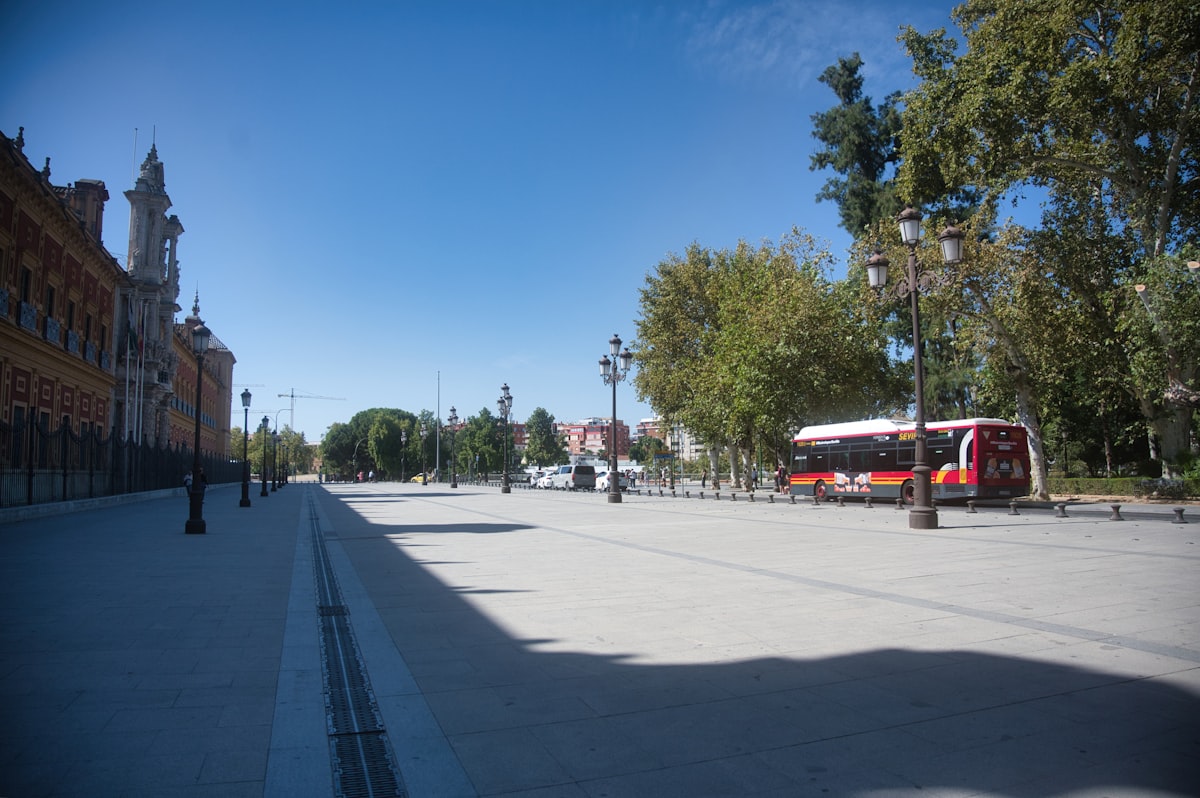
Seville is the starting point of this Jacobean route which, following ancient Roman roads, crosses Extremadura and Castilla y León before reaching Galicia. At 973 km and 36 stages, it is one of the longest Camino de Santiago routes.
From Granja de Moreruela the route continues along the Sanabrés Way, entering Galicia via Ourense and reaching Santiago de Compostela; a variant also heads to Astorga to join the French Way.
Pilgrims cross dramatically changing landscapes: from the olive groves and vineyards of Andalusia to the rolling plains of Extremadura, passing the monumental cities of Mérida and Cáceres (both UNESCO World Heritage Sites), to the cereal fields of Castile and the oak and eucalyptus forests of Galicia.
Multiple Roman vestiges endure: stretches of road, bridges, milestones, theatres and arches that have been in use for over 2,000 years. The name likely derives from the Arabic "balata" (paved road).
It is a route for experienced pilgrims, with longer stages and fewer services than the French Way, but rewarding with contemplative solitude and extraordinary historical heritage.